
Imtiaz Ahmed
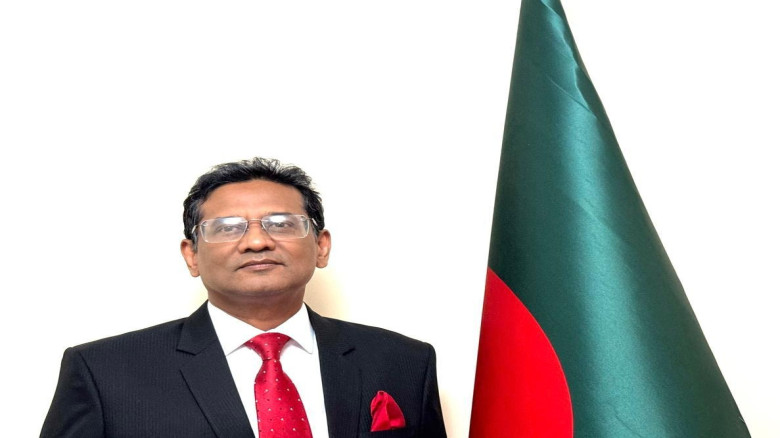
Bangladesh Ambassador to Italy ATM Rokebul Haque in an interview with a group of journalists said that the Italian government and local authorities recognise the Bangladeshi community as a valuable contributor to the economy.
Italy hosts the 2nd largest Bangladeshi expatriate community in Europe after the UK. The estimated number of Bangladeshis presently living in Italy is more than 200,000 (including both regular and irregular migrants).
As Ambassador of Bangladesh to Italy, “I believe the coming period will bring renewed momentum to Dhaka–Rome relations, grounded in shared priorities, economic cooperation, and strong people-to-people ties.”
The rest part of the interview is given below “
Bangladesh has a new government under the leadership of Prime Minister Mr. Tariqure Rahman. How do you see Dhaka -Rome relations in the coming days? Do you see high level visits in the coming days?
The formation of a new government in Bangladesh under the leadership of the Hon’ble Prime Minister, Tarique Rahman, offers a valuable opportunity to further strengthen the longstanding, multifaceted relationship between Bangladesh and Italy. This sentiment is well captured in the congratulatory message of Italian Premier Giorgio Meloni addressed to the newly elected Prime Minister of Bangladesh. She conveyed, “Our two Nations are united by a longstanding friendship and vibrant people-to-people ties, further strengthened by the presence of a large Bangladeshi community. I am confident that, under your leadership, we will be able to further consolidate this engagement into concrete initiatives to expand safe migration pathways. I am confident that during your tenure we will continue to deepen our bilateral relations across many fields, to fully grasp the many unexplored opportunities that lie ahead of us, especially in the economic sector.”
What is the number of Bangladeshis living in Italy? How does the Italy government evaluate their contributions to the EU economy?
Italy hosts the 2nd largest Bangladeshi expatriate community in Europe after the UK. The estimated number of Bangladeshis presently living in Italy is more than 200,000 (including both regular and irregular migrants). Bangladeshi community in sixth place among the main non-EU citizens in Italy in numerical terms, rising from the eighth position of the year 2022. Italy is the 7th largest source of remittance for Bangladesh. In 2024-2025 Bangladeshi diaspora has sent around 1.48 billon US dollar as remittance to Bangladesh.
The Italian government and local authorities recognise the Bangladeshi community as a valuable contributor to the economy. Through hard work, entrepreneurship, and active participation in the labour market, Bangladeshis have established this footprint in Italy’s social and economic fabric. They are also strongly represented in small and medium-sized enterprises, ranking among the leading non-EU groups in business ownership. In this way, the Bangladeshi diaspora serves as a bridge of shared prosperity for both Italy and the wider European economy.
The visa process of the Italian consular section has been very slow as some 40,000 visa cases are pending with the consular section in Dhaka. Can you please address the issue with higher authorities in Rome?
The large number of visa applications must be seen in a particular context. Italy’s Flussi Decree, which allows the legal entry of non-EU workers, created strong interest among Bangladeshi job seekers. Large quotas in recent years led to a sharp rise in applications. Unfortunately, some intermediaries and organised networks misused the process and many applicants submitted their visa applications with improper documents. This increased the workload for the Italian authorities, required further scrutiny which caused the delays. However, this concern has now been mitigated to a considerable extent. The Government of Italy has increased their human resources to dispose of pending visa application and strengthened verification procedures and regulatory safeguards to prevent the submission of fake documents. These measures have taken to ensure that an applicant with genuine documents should not be deprived. The Embassy of Bangladesh in Rome has been consistently engaging with the relevant Italian authorities at all levels since the issue emerged for expeditious disposal of pending the visas.
Illegal migration in EU countries, particularly in Italy is a matter of concern. How do you see the matter of illegal migration?
Irregular migration to Italy and the wider European Union has emerged as an important issue. In recent years, we have noticed arrivals from different countries including Bangladesh through different routes to Italy. This trend has placed added pressure on border management and reception system in Italy. From Bangladesh’s perspective, this is a matter of serious concern, as many migrants undertake dangerous and exploitative journeys through transit routes through different countries. Bangladeshi migrants face vulnerabilities at every stage of this process. They fell victim to middlemen and unscrupulous trafficking networks. They are lured to undertake hazardous and life-threatening sea crossings. In this context, present government is committed to working closely with Italy to promote legal migration and curb the flow of irregular migration so that migration and mobility continue to be an important aspect of Bangladesh–Italy relations. Bangladesh remains committed to promote safe, orderly migration through continued cooperation with Italy and EU countries.
Bangladesh has expressed to deepen relations with Italy on strategic issues. How do you see the development?
Bangladesh’s intention to deepen engagement with Italy beyond traditional bilateral issues is both timely and mutually beneficial. In recent years, our cooperation has expanded more into migration management, where both countries share common interests. Italy’s focus on safe, orderly, and regular migration, alongside efforts to reduce irregular migration, aligns with Bangladesh’s priorities. The signing of the Migration and Mobility Partnership and continued dialogue between relevant authorities show a shared commitment to making migration a positive and mutually beneficial area of cooperation. Bangladesh and Italy have also supported each other in different international fora on matters of shared interest. Italy’s growing interest in the Indo-Pacific and its recognition of Bangladesh as a stable and emerging partner have opened new opportunities for strategic cooperation. Both countries are working more closely on issues such as maritime cooperation, trade connectivity, climate change, food security, and sustainable development. Bangladesh-Italy bilateral trade is hovering around some 2 billion US dollars.
What is our target to reach bilateral trade to its potential level within the next five years?
Bangladesh-Italy bilateral trade, currently approaching USD 3 billion, reflects a solid and steadily expanding economic partnership. Italy has already established itself as Bangladesh’s sixth-largest export destination, as well as an important source of high-quality industrial inputs. Recent trade figures point to both depth and balance in the relationship, underscoring the strong complementarities between the two economies. At the same time, this trade volume remains below its full potential, particularly in light of shared strengths in manufacturing, technology, and value-added sectors. From the Embassy’s perspective, a realistic and strategically desirable objective over the next five years would be to reach bilateral trade to the range of USD 5-6 billion through greater diversification, enhanced value addition, and more structured economic engagement. This would involve moving beyond traditional sectors such as ready-made garments towards higher-value areas including textile technologies, leather and footwear, ceramics, agro-processed products, pharmaceuticals, and ICT services. On the import side, expanded collaboration in machinery, renewable energy technologies, and industrial innovation from Italy can play a meaningful role in strengthening Bangladesh’s productive capacity.
Foreign direct investment (FDI) to Bangladesh suffered during 2024 and 2025. The new BNP government has been working hard on improving the business environment in Bangladesh. What are your observations about the business environment in Bangladesh? How do you see the prospect of Italian government in the prospective sector?
The renewed policy emphasis of the new government on strengthening the business environment is both timely and encouraging. Bangladesh continues to offer a range of structural strengths that remain attractive to international investors, including a large and youthful workforce, sustained economic growth, a strategic geographic location, and a rapidly expanding domestic market. Ongoing initiatives to develop economic zones, upgrade infrastructure, and expand digital services are expected to further consolidate the country’s investment ecosystem in the period ahead. Against this backdrop, the prospects for expanding Italian engagement are particularly promising. Italy’s industrial capabilities-especially in machinery, textile, leather technologies, renewable energy, agro-processing, and light engineering-align closely with Bangladesh’s development priorities. Italian companies are already highly regarded in Bangladesh for their technological excellence and innovation, and there is growing interest in deepening their presence through joint ventures and technology partnerships. With targeted facilitation measures, Bangladesh is well positioned to attract Italian investment, notably in sectors such as green energy, shipbuilding, leather, pharmaceuticals, and ICT.
Note: Rokebul Haque, a career diplomat belonging to the 20th batch of the BCS (Foreign Affairs) cadre, joined the Bangladesh Foreign Service in 2001. He was Director General of South Asia Wing of the Ministry of Foreign Affairs. He was the Deputy High Commissioner at the Bangladesh High Commission in New Delhi. He has also served in different capacities in Bangladesh missions in Islamabad, The Hague and New York (Permanent Mission to the UN)