

Customs valuation controversy, port congestion and demurrage weigh on investment projects in high-tech parks; Investment-friendly environment in question
The government has been announcing various incentives, tax holidays and special economic benefits to attract foreign investment in Bangladesh. But does the reality match the promise? The complaint of a company ALU Hi-Tech Park investing in the Kaliakair Hi-Tech Park under the Bangladesh Hi-Tech Park Authority (BHTPA) has brought that question to the again.
The company claims that despite valid approvals, SRO facilities and government promises, their project has almost come to a standstill due to customs valuation complications, protracted procedures, port congestion, excessive demurrage and lack of coordination between various agencies. They claim to have faced a financial loss of about $16.7 million.
The investment aimed to reduce import dependency. The main objective of the project was to set up a modern beverage can and packaging plant in Bangladesh. According to the entrepreneurs, if the factory was launched, a large part of the canned goods used in the country would be produced locally. This would not only reduce import costs, but also save foreign exchange, create employment and develop the industrial sector.
The company claims that the project also received high-level interest and support from the Chinese government. As a result, it was not only a commercial initiative, but also considered an important part of Bangladesh-China economic cooperation.
Despite having SRO facilities, no duty exemption. According to the complaint, as investors in the Hi-Tech Park, they were eligible for SRO facilities for importing construction materials, machinery and raw materials.
But the customs authorities refused to provide that facility.The company claims that the actual price of the construction materials they imported was 0.5 US dollars per kilogram. But the customs authorities valued it at US$1.5 per kg and imposed an additional 58.6 percent duty on that basis.
They alleged that this valuation was inconsistent with the internationally accepted Transaction Value Method and inconsistent with the actual import price.
After a year of struggle, exemption was granted. The company said that they had to go to the High Court to get the duty exemption.
After collecting certificates from the Bangladesh Steel Manufacturers Association and the Bangladesh Hi-Tech Park Authority, technical evaluations from BUET and CUET, and completing multiple administrative processes, after about a year, they were able to prove that there was no local alternative to the imported materials.
Finally, the customs authorities granted the SRO facility, but by then huge losses had been incurred.
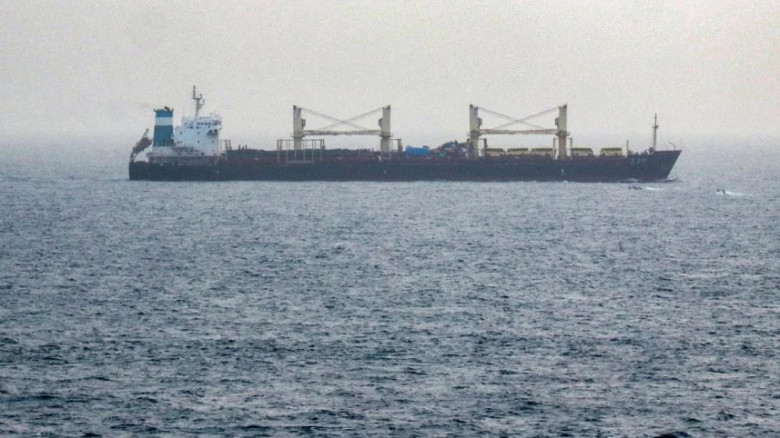
This is because demurrage and detention charges accumulated on the containers as the goods were stuck at the port for a long time.
The organization’s biggest complaint is about the demurrage and detention (D&D) charges of shipping companies.
According to them, even if the goods are stuck at the port due to customs complications, the investor ultimately has to bear the responsibility.
Although 90 percent of the demurrage was waived in some cases with the intervention of the BIDA chairman and the ministry shipping advaisor, the payment of the remaining 10 percent was much higher than in other countries.
Although 11 of the 41 containers that came through Globe Shipping were able to be unloaded, it is alleged that the remaining containers under CNC and MSC are still stuck in complications.
The most worrying information is that in some cases, it is claimed that the demurrage and detention charges have reached up to 220,000 US dollars per container.
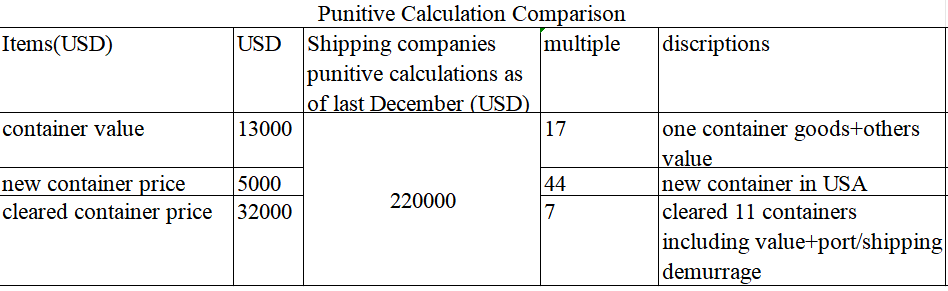
According to the organization, this figure is about 17 times the value of the cargo and about 44 times the cost of a new container.
Is port congestion exacerbating the crisis?
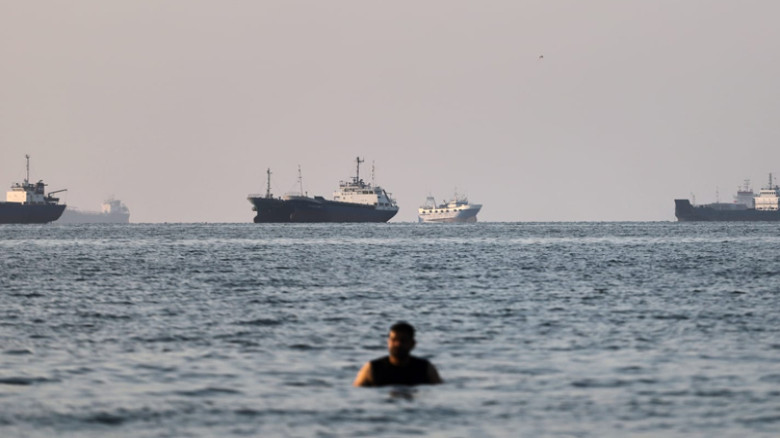
The company, citing customs data for March, said that 88 percent of the port’s capacity has already been used.
The port is practically at capacity, with about 47,000 TEU containers piling up against a capacity of 53,000 TEUs.
According to them, this is not an isolated incident; rather, it is a reflection of a structural crisis in the country’s logistics system, which is creating additional costs and uncertainty for investors.
Gap between promises and realityThe company alleges that at the time of signing the investment agreement, gas, electricity and other infrastructure facilities were promised on time.
But in reality, many of those facilities have not been confirmed yet.
They also expressed dissatisfaction with the land lease.
They claim that although the official brochure of BHTPA mentions the rent per square meter of land for the first six years as US$0.50, in reality they are being charged US$3.
The problem is not just one company. According to economic analysts, Bangladesh is currently facing challenges in attracting foreign direct investment (FDI).
Investors generally give the most importance to three factors—policy stability, administrative efficiency, and a predictable business environment.
When a project faces administrative complications, approval delays, customs disputes, or additional costs like demurrage year after year, it is not just a loss for the company; it also affects the investment image of the entire country.
The company has made five main demands to the government—
- Revision of land lease rates as per the BHTPA brochure And the first five years of rent waiver.
- Fast delivery of promised gas and RMU infrastructure.
- Compensation for $16.7 million in losses caused by bureaucratic delays and customs complications.
- Effective one-stop service launched for fast customs clearance and inter-agency coordination.
- Govt Intervention: Immediate retrieval of construction materials.
Bangladesh wants to establish itself as a regional manufacturing and investment hub. Hi-tech parks, economic zones and industrial policies have been developed with that goal in mind.
According to investment experts, the success of a project does not only depend on tax breaks or land allocation; rather, it depends on administrative efficiency, quick decision-making, transparent customs policy and a predictable business environment.
Because foreign investors seek not only profit, but also certainty. And if that assurance cannot be ensured, achieving Bangladesh’s goals of industrialization and attracting investment may become more difficult.