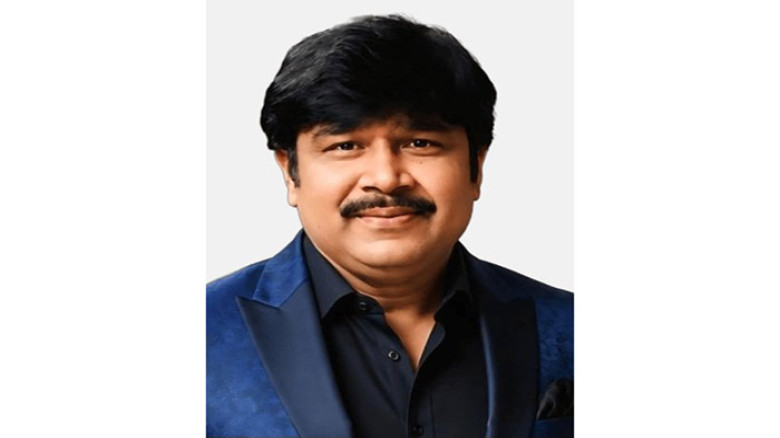
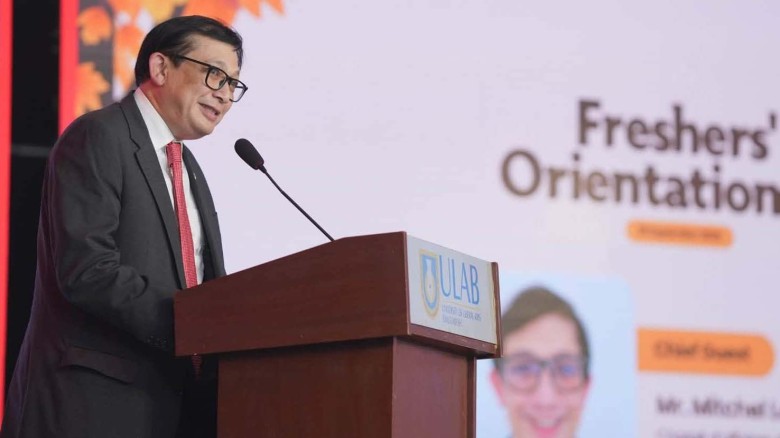

Charge d’ Affairs of the Singapore High Commission in Dhaka
Interview with Mitchel Lee in an interview with the Capital Views said that
Singapore is interested to work with the relatively new BNP government to
deepen the bilateral relationship between the two countries.
The interview is given below:
1.Seven months have
passed since the BNP government came to power on 12 February 2026. How do you
see Bangladesh-Singapore relations in the coming days and months?
Answer: Singapore remains optimistic about Bangladesh’s long-term growth trajectory. Singapore is keen to work with the relatively new BNP government to deepen the bilateral relationship between both sides. We see win-win possibilities for collaboration in areas such as the logistics sector including Chattogram’s Bay Terminal project, the aviation sector, infrastructure development, energy, the digital economy and capacity-building.
2.Bangladesh has
become a middle-income country this year. What is your view of Bangladesh’s
development path over the last 54 years?
Answer: Bangladesh has made great strides in its human
development over the last 54 years. It has done well in a number of human
development indicators and its GDP per capita has now reached that of a
middle-income country. For every country, there is always room for improvement.
My personal opinion is that more work needs to be done to support women’s
empowerment and development, improve the quality of education and the living
environment.
3.Bangladesh has been
going through an energy crisis since a war in the Middle East broke out in late
February 2026. How do you see the situation there and what can countries like
Bangladesh and Singapore do to improve the situation?
Answer: The situation will be challenging in the immediate term given that Bangladesh is reliant on overseas supply of LNG for its electricity and prices are likely to remain high for the foreseeable future. Domestic production of gas is also declining and expanding production domestically will also take time, be it onshore or offshore production. The government should move quickly in implementing the Prime Minister’s recent five-point plan. There should also be patience from the public and a drive to save electricity to lessen the impact of the crisis. I also note that electricity is subsidized in Bangladesh and the true cost of electricity is not reflected in what consumers are paying. This is something that needs to be addressed perhaps gradually. In Singapore, we are incentivized to save electricity and price-setting is an important lever to help consumers make better choices.
4.What is the present
bilateral trade volume between Bangladesh and Singapore and how do you see it
in the next five years?
Answer: In 2025, bilateral trade volume amounted to 3.9
billion Singapore dollars or around USD$3 billion. It is hard to say by how
much trade will go up or down in the next five years. That said, if we conclude
an FTA soon with Bangladesh, we can expect trade to pick up accordingly.
5.The government is
working on improving the business environment in Bangladesh. How do Singapore
businesses see the business environment in Bangladesh?
Answer: Singapore companies are increasingly on the lookout
for opportunities in emerging markets where they have not ventured to before.
However, they are also careful and want a predictable business climate. The
last few years of political transition in Bangladesh has resulted in a
challenging business environment in Bangladesh. If predictability and stability
can be sustained, we can expect Singapore companies to pay more attention to
Bangladesh. Bangladesh must also benchmark its business environment and
conditions with countries that are viewed as its competitors.
6.Singapore has one
of the best healthcare systems in the world. How can Singapore help improve the
healthcare system in Bangladesh?
Answer: There has been interest from Bangladeshi businessmen
to collaborate with Singapore health care providers. Singapore’s privately run
hospitals have thus far not looked at venturing into Bangladesh. Bangladesh
will need to do more homework to promote investment into this sector including
improving the business climate. In the public sector, Singapore’s General
Hospital signed an MOU with Bangladesh’s National Institute of Burn and Plastic
Surgery in 2016 which was renewed in 2024. Cooperation focusses on providing
capacity-building in burn care management and specialized clinical training.
During my time in Dhaka, I have also seen several medical
teams travel to Bangladesh perform emergency medical missions and elective
surgeries. This has hopefully helped to provide some support to healthcare
delivery in Bangladesh.
7.Though Bangladesh
has plenty of water given it has many rivers flowing through it, safe and clean
drinking water is still an issue. How can Singapore help in this matter?
Answer: Singapore has considered water as an existential
issue for the country’s survival. A lot of work and research has been done to
maximise our water resources including recycling and tapping on water runoff
and investing in drainage systems. We are happy to share our experiences with
Bangladesh. Singapore has been hosting the Singapore International Water Week
biennially for a long time. We just held the latest edition in June 2026. We
welcome Bangladesh to take part in the next one and to meet with solution
providers and to share experiences in water management. I believe that water
scarcity is not an issue for Bangladesh if it can devote resources into
irrigation, drainage and storage facilities. In other words, have a system put
in place. This could be done in a small scale, pilot project and replicated
elsewhere in due course.
8.There are many
Bangladeshis living in Singapore. What is the figure and how do you assess
their contributions to Singapore and to Bangladesh?
Answer: Singapore values our migrant worker community which
includes several thousands of Bangladeshi workers involved in the marine and
construction sectors. They have helped to build up our physical infrastructure
and built environment. They enjoy good working conditions. Whilst we do not
employ millions of them like some other countries and Singapore is a small
island state of about 700 square kilometers, Singapore ranks among the top ten
countries (9th) in terms of the amount of remittances sent back to Bangladesh
(USD$136 million in the last year). This means that salaries are comparatively
higher in Singapore.
9.Bangladesh and
Singapore celebrate 54 years of bilateral relations this year. What are some of
the highlights and milestones of this relationship?
Answer: Bangladesh has a number of milestones in our
relationship. An Air Services Agreement between both sides was first signed in
May 1979 and was expanded most recently in 2018. In 1980, both sides signed a
Double Taxation Avoidance Agreement (DTA). The DTA entered into force in
December 1981. In 2004, a Bilateral Investment Treaty was concluded between
both sides. In 2018, an MOU was also signed on cooperation in public private
partnerships with Bangladesh. This MOU was renewed in January 2026. In November
2022, both sides signed an MOU on Trade and Investment which established a
Joint Working Group to work on bilateral investment projects and a possible
FTA.
10.PSA International,
a leading global port operator has expressed interest in developing the Bay
Terminal in Chattogram Port. What is the status of this project?
Answer: PSA and the Chittagong Port Authority have been in
discussions on the Bay Terminal project for quite some time. A modelling study
or survey is being carried out to determine some of the technical parameters
currently. We hope that the project will be awarded in the not to distant
future. If so, work can start soon after and it may take around 3 years to
complete.
11. Some 1.2 million
Rohingyas are living in Cox’s Bazar. How does Singapore view the Rohingya issue
in Bangladesh?
Answer: We understand that Bangladesh is keen on the safe, voluntary and dignified repatriation of Rohingyas from Bangladesh to Myanmar. For this to happen, there needs to be conducive conditions for this in Myanmar and Rakhine state. We do not see conducive conditions at the moment or foreseeable future. There has also been no progress on ASEAN’s five-point consensus which Myanmar military authorities had agreed to more than four years ago. Singapore will continue to support ASEAN’s work through the ASEAN Coordinating Centre for Humanitarian Assistance on disaster management (AHA Centre). ASEAN’s work involves focusing on diplomacy and nudging Myanmar authorities to make good on the ASEAN five-point consensus as well as working through the AHA Centre to create conducive conditions for the safe, voluntary and dignified repatriation of refugees.
12.Singapore has
signed carbon credit collaboration MOUs and agreements with a number of
countries. The Bangladesh government has formed a 25 member “National Committee
on Climate Finance (NCCF) with Prime Minister Tarique Rahman as its chairman to
bring climate finance, carbon credits and carbon trading activities under an
integrated and effective national framework. Are there plans for Bangladesh to
collaborate with Singapore on carbon credits?
Answer: Singapore has signed 11 Implementation Agreements
(IAs) on carbon credit collaboration with a diverse range of partners spanning
Africa, Latin America, and Asia. Work is underway to operationalise these
Implementing Agreements.
With Bangladesh, we have recently proposed a draft MOU on
carbon credits collaboration with the BNP government. We are awaiting feedback
on the draft. We hope that after this, we could go one step further to sign an
Implementation Agreement. The development of high-quality carbon credits
projects can attract investments deliver benefits for local communities in
Bangladesh. It will also fulfil our respective climate commitments under
Article 6 of the Paris Agreement.
13.During the Fourth
Foreign Office Consultations between the two countries held in April 2025,
Bangladesh and Singapore discussed setting a target of finalizing a bilateral
FTA by 2026. What is the status of the FTA?
Answer: We have had two rounds of negotiations since an FTA
was first mooted in November 2022. We hope that negotiations can be held at a
quicker pace. The third round of discussions will take place in October 2026.
There is much to gain by both sides with an FTA and it will help Bangladesh
better prepare for its LDC graduation