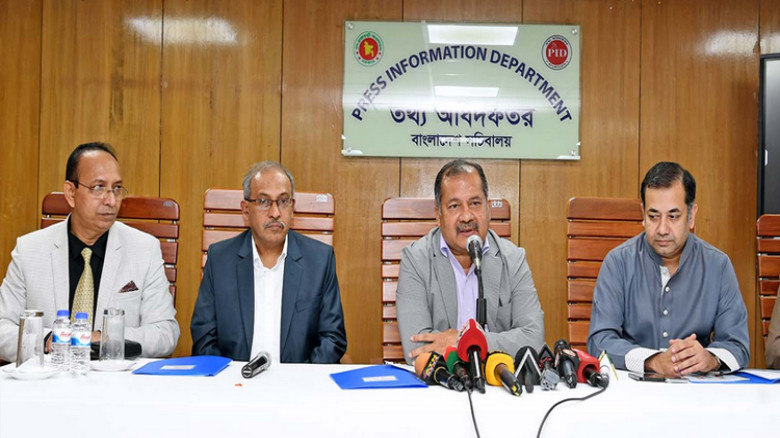


Recently, following the tragic deaths of six newborns at
Ad-Din Medical College Hospital in Moghbazar, Dhaka, the Director General of
the Directorate General of Health Services (DGHS), Dr. Provat Chandra Biswas,
announced at a press conference that the hospital's licence may be revoked. The
deaths of these newborns are undoubtedly heartbreaking. A fair, impartial, and
thorough investigation is essential, and those found responsible must face
exemplary punishment. At the same time, however, a fundamental question arises:
Is it an institution that commits wrongdoing, or is it individuals?
The reality is that institutions themselves do not commit
errors or crimes; individuals do. Such responsibility may lie with physicians,
administrators, employees, or other concerned authorities. A hospital is not an
ordinary institution. It is closely linked to human life, healthcare, public
trust, hope, and employment. It is built over many years through substantial
investment, dedicated professionals, sacrifice, and public confidence.
Therefore, the decision to shut down a hospital—particularly one that has
earned the trust of ordinary people by providing affordable healthcare—should
be made with the utmost caution.
Ad-Din Medical College Hospital was established in 1997 and
has since grown into one of the country's major non-profit healthcare
institutions. Ad-Din Women's Medical College, located on the same campus, was
founded in 2008 and began its academic activities in December of that year. The
institution admits a significant number of students annually, and hundreds are
currently enrolled. It also employs a large number of physicians, academic
staff, officers, and employees. The hospital has long been known for providing
healthcare while respecting patients' modesty and religious values. It offers
specialised maternal and child healthcare, medical education, and 24-hour
emergency services. Over the years, it has earned the trust of the public by
providing quality healthcare at an affordable cost.
Unfortunately, treatment-related deaths and other adverse incidents
are not uncommon in hospitals across Bangladesh. Such incidents are often
followed by vandalism, assaults on healthcare professionals, and heightened
public unrest. Consequently, healthcare delivery has become an increasingly
sensitive and high-risk profession. While accountability in the health sector
is indispensable, it is equally important to ensure continuity of services and
maintain a safe environment for healthcare providers.
In Bangladesh, government hospitals remain insufficient in
both capacity and quality to meet the healthcare needs of the country's large
population. As a result, the private sector has become an indispensable partner
in delivering healthcare services. It would be extremely difficult for the
government alone to provide quality healthcare to all citizens. Therefore,
decisions that discourage private investment and participation in healthcare
may have serious long-term consequences. In particular, abruptly suspending the
operations of the hospital that provides relatively affordable healthcare would
ultimately harm ordinary people the most.
As a concerned citizen, I firmly believe that the law must
never be applied selectively or against particular institutions, groups, or
sectors. It is no secret that irregularities, mismanagement, and corruption
exist across many sectors of our society. Therefore, impartial, equal, and
non-discriminatory enforcement of the law is essential—not only in healthcare
but also in education, market regulation, anti-corruption efforts, and every other
sphere of public life. Selective or discriminatory application of the law
inevitably raises questions about the neutrality of the administration and
erodes public confidence.
In conclusion, the tragic deaths of the newborns at Ad-Din
Hospital demand a fair and impartial investigation, and those individuals found
responsible must receive exemplary punishment. However, holding an entire
institution accountable for the alleged negligence of a few individuals by
shutting down a long-established healthcare facility or revoking its licence
cannot be considered a just or proportionate response. The proposed action by
the Directorate General of Health Services appears more likely to complicate
the situation than to resolve it and is unlikely to produce any positive or
constructive outcome.
At a time when access to quality healthcare remains limited
in Bangladesh, abruptly closing a functioning hospital would create immense
hardship for the general public. Therefore, instead of reacting impulsively by
shutting down the hospital, it would be far more prudent, in the interest of
justice and public welfare, to allow the institution to continue providing
healthcare services while ensuring that those truly responsible are brought to
justice. This ultimately raises a broader question: Can Bangladesh build a
safe, humane, and high-quality healthcare system through emotionally driven and
short-sighted decisions, or without ensuring the impartial and universal
application of the law?
Author is a Vice-Chancellor, Eastern University, Dhaka