
When Yasmin Akter pulled up to the Deputy Commissioner’s office in her rented, battery-operated auto-rickshaw, she wasn’t looking for a handout. Struggling to support her three young children and a husband left disabled by a road accident, she had chosen to hit the streets as a driver to make ends meet—often with her children sitting beside her.
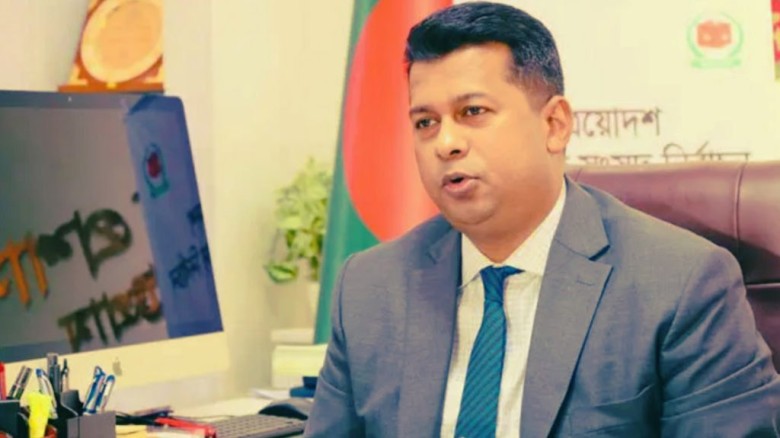
Word of her resilience reached Chattogram’s Deputy Commissioner (DC), Mohammad Zahidul Islam Mian, through a local journalist. During the weekly Wednesday public hearing, Deputy Commissioner Mohammad Zahidul Islam Mian didn’t just call her into his office; he walked downstairs and stood beside her auto-rickshaw to hear her story directly.
“Despite facing so many challenges, you never asked for handouts or compromised your dignity,” he told her. “You are working hard to make ends meet—that is truly commendable.”
Before leaving that day, Yasmin received immediate financial aid for her husband’s medical treatment, essential household groceries, and encouragement to keep her children in school. For Yasmin, the gesture provided far more than temporary relief—it gave her the courage to keep fighting for her family’s future.
A Culture of Direct Action Yasmin’s story is just one example of what happens at the district administration’s weekly public hearings. Every Wednesday, people arrive with complex, pressing problems—patients needing funds for cancer treatment or dialysis, students struggling with tuition, or citizens trapped in bureaucratic land disputes.
Under Deputy Commissioner Mohammad Zahidul Islam Mian’s leadership, the goal is swift, compassionate resolution:
Immediate Relief: When Kurban Ali, a man living with quadriplegia, attended a hearing hoping for an electric wheelchair, the administration purchased and presented one to him before the session even ended.
Educational Support: Omar Faruk, a visually impaired student and the son of a day laborer, secured admission to the University of Chattogram but faced financial uncertainty. The administration stepped in to cover his educational expenses.
Rapid Response in Crises: Following a tragic incident in Sitakunda where ten workers lost their lives to toxic gas in a ship-breaking yard, Deputy Commissioner Mohammad Zahidul Islam Mian visited the injured in the hospital and coordinated with relevant parties to secure compensation for the victims’ families, delivering aid within just nine days.
Practical Governance and Streamlined Public Services Behind the humanitarian gestures is a firm commitment to institutional efficiency. In a meeting with administrative staff, Deputy Commissioner Mohammad Zahidul Islam Mian laid out a straightforward philosophy: “Complete today’s work today.”
“It is your sacred duty to complete your assigned tasks on the very same day. After all, you occupy that chair to serve the people.”
To back this up, he introduced daily self-evaluations, surprise inspections, and active monitoring to curb harassment and delay in basic government services—particularly around land management.
Leading the Nation in Resolving Land Grievances Land disputes and administrative delays are major sources of frustration across Bangladesh. By focusing on direct communication and efficient processing, Chattogram’s district administration has achieved notable results:
55% Settlement Rate: Chattogram resolved 486 out of 882 online land complaints over four months—nearly double the national average settlement rate of 29%.
Outperforming Other Districts: Chattogram led the country, resolving 289 more complaints than second-ranked Mymensingh.
Direct Citizen Engagement: Service seekers now receive land mutation records directly via mail or have issues resolved through quick phone calls from Assistant Commissioners.
Protecting Chattogram’s Environment & Community Deputy Commissioner Mohammad Zahidul Islam Mian’s proactive approach extends beyond administrative offices into environmental and social development:
Protecting the Hills: To combat illegal hill-cutting and prevent dangerous monsoon landslides, mobile courts are actively enforcing environmental laws in high-risk areas like Sitakunda, Akbar Shah, and Bayezid—seizing machinery, issuing fines, and directing task forces to rehabilitate hazardous settlements.
Safeguarding the Halda River: As one of Asia’s vital natural fish-spawning grounds and a home to the endangered Ganges river dolphin, the Halda River faces constant threats from illegal sand extraction and pollution. The district administration has stepped up river monitoring, restricted unregistered motorized boats, and engaged local fishermen in conservation efforts.
Plastic for Zoo Entry: In a creative effort to build environmental awareness among youth, the administration launched an initiative offering free entry to the Chattogram Zoo—plus a free tree sapling—in exchange for 100 grams of plastic waste.
Engaging Youth Through Sports: Chattogram saw a massive turnout for the Notun Kuri youth sports competition, registering over 181,000 students (compared to roughly 59,000 in Dhaka), thanks to strong mobilization by field officers.
A Vision Grounded in Values and Service Born in Bhuyapur, Tangail, Mohammad Zahidul Islam Mian studied International Relations at the University of Dhaka, holds a diploma in Russian, and earned an MSc in Human Resource Management in the UK. After joining the civil service in 2006 through the 25th BCS examination, he served as Assistant Commissioner (Land), Upazila Nirbahi Officer (UNO), Additional Deputy Commissioner, and Deputy Commissioner of Narayanganj before taking charge of Chattogram.
Whether leveraging technology like AI-powered traffic monitoring or expanding training programs for women and fishermen’s children, his focus remains on public service that balances modernization with empathy.
By stepping out from behind the desk to listen to everyday citizens, Chattogram’s administration is demonstrating how public authority can move beyond red tape to build genuine trust with the community.