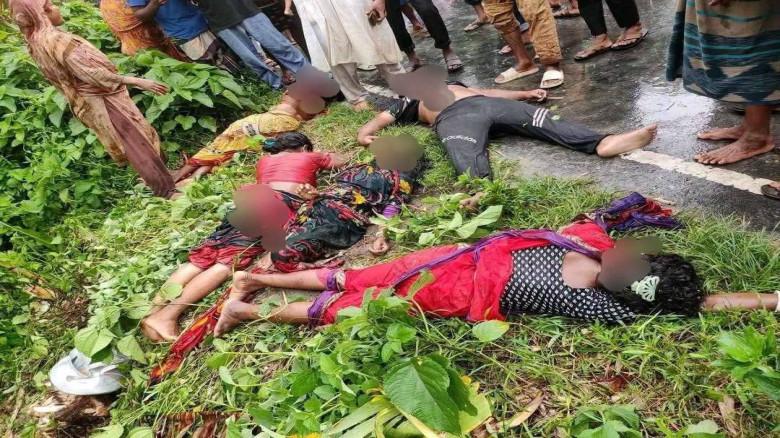


DHAKA : At least 622 people were killed and 1,652 others
injured in road accidents across Bangladesh in May, according to a report
released on Saturday by Bangladesh Jatri Kalyan Samity (BJKS).
The passenger welfare organisation’s Accident Monitoring
Cell compiled the figures through media monitoring, noting that actual
casualties could be significantly higher as many incidents go unreported.
Factoring in rail and waterway accidents, the combined
toll for May stood at 671 deaths and 1,696 injuries across 676 incidents. Rail
accidents numbered 42, leaving 34 dead and 29 hurt, while 21 waterway incidents
claimed 15 lives, injured 15 and left seven missing, reports UNB
Motorbikes emerged as the most dangerous vehicle category,
with 221 accidents killing 231 and injuring 219, accounting for 36.05 percent
of all road accidents and 37.13 percent of fatalities.
The report was made public through a statement signed by
BJKS Secretary General Md Mozammel Haq Chowdhury.
Dhaka Division recorded the highest number of road
accidents in May, 180 crashes killing 185 and injuring 558. Mymensingh Division
reported the fewest, with 27 accidents, 38 deaths and 67 injuries.
Among those killed were 136 drivers, 110 pedestrians, 73 students,
69 women, 59 children, 49 transport workers, eight teachers, two police
personnel, two BGB members, one physician, one freedom fighter and one lawyer.
Analysis of accident types showed head-on collisions
accounted for 42.08 percent of all incidents, followed by vehicles running over
or hitting others (32.30 percent), loss of control leading to falls into
ditches (18.92 percent), and train-vehicle collisions (0.81 percent).
Of 975 vehicles identified in accidents, motorcycles made
up 28.69 percent, followed by trucks, pickups and covered vans (23.10 percent),
buses (14.45 percent), battery-powered rickshaws and easy bikes (12.97
percent), and cars, jeeps and microbuses (6.75 percent).
In terms of location, 44.69 percent of accidents occurred
on national highways, 30.66 percent on regional highways and 18.10 percent on
feeder roads.
BJKS identified several major factors behind the May
carnage, including unrestricted movement of motorcycles, battery rickshaws and
auto-rickshaws on national highways; absence of road signs, markings and
lighting; lack of median dividers; vehicles travelling in the wrong direction;
reckless and fatigue-driven driving; and road damage worsened by rain.
The organisation also flagged that excessive fares are
forcing low-income commuters to ride atop buses and cargo trucks, sharply
elevating accident risk.
BJKS called for short-, medium- and long-term road safety
plans; the development of a modern national bus network; technology-driven
traffic management; rigorous driver training and licensing reforms; and regular
road safety audits.
It also demanded service lanes and footpaths on major highways, an end to extortion on roads, guaranteed wages and regulated working hours for drivers, phasing out of unfit vehicles, strengthened BRTA capacity, and the establishment of a dedicated traffic training academy.