

The creation of new jobs, attracting investment, cutting high economic disparity, containing massive corruption, revving the stock market and removing nepotism are some major challenges to the present BNP government, said a retired professor of the economics department of Dhaka University while talking to this correspondent.
Some 20 lakh youths enter the job market every year creating a hiccup in the job market as the Bangladesh economy in the last 5 years also witnessed slower growth with creation of fewer jobs in the market, said a leader of the Metropolitan Chamber of Commerce and Industry (MCCI)
As the war situation in the middle–east improves with the USA and Iran are working on a peace deal, manpower of Bangladesh has improved in May with the country exported a total of 60,155 workers to different countries clocking 23 per cent growth over the previous month, according to Bureau, Manpower, Employment and Training (BMET)
Bangladesh exported a total of 48,987 workers in April, a total of 45,112 workers in March and 67,969 in February and 99,616 workers in January, according to according to Bureau, Manpower, Employment and Training (BMET)
The USA-Israel imposed war on Iran has hit the overseas employment of Bangladesh creating an uncertainty in the overseas job market, said a leader of Bangladesh Association of International Recruitment Agencies (BAIRA).
Bangladesh exported a total of 95,092 workers in January, 65,634 workers in February, 44629 workers in March and 43,490 workers in April to overseas countries.
Saudi Arabia remained the top destination in both months, though numbers declined significantly. Labour recruiters noted that low-skilled workers continue to dominate Saudi Arabia and other Middle Eastern routes.
A leader of Bangladesh Association of International Recruiting Agencies said that export of manpower to different countries is expected to get momentum, provided the USA and Iran sealed a peace deal
Meanwhile, the USA-Israel imposed war on Iran has hit the overseas employment of Bangladesh creating an uncertainty in the overseas job market, said Bangladesh Association of International Recruitment Agencies (BAIRA).
Bangladesh exported a total of 95,092 workers in January, 65,634 workers in February, 44629 workers in March and 43,490 workers in April to overseas countries.
Finance and Planning Minister Amir Khasru Mahmud Chowdhury in his budget speech that the Middle East remains the most significant destination for Bangladesh’s migrant workforce. Prolonged instability in the region may adversely affect employment opportunities abroad, income flows, and the continuity of remittance inflows. Although remittance receipts have not yet shown any negative impact, early signs of pressure are being observed in manpower deployment. For instance, while approximately 95,000 workers departed for overseas employment in January 2026, this number declined to around 44,000 in March. If this trend persists, it may emerge as a matter of serious concern for the external sector and labour market stability.
The creation of jobs in the local and international markets are in a shambles with growing energy prices shaking the global economic growth including Bangladesh, said a BAIRA leader.
Saudi Arabia remained the top destination in both months, though numbers declined significantly. Labour recruiters noted that low-skilled workers continue to dominate Saudi Arabia and other Middle Eastern routes.
Shamim Ahmed Chowdhury Noman, former secretary general of the Bangladesh Association of International Recruiting Agencies, said: "The payment structure is still between Tk25,000 and Tk30,000. Most Bangladeshis are employed as cleaners, construction workers, and housemaids. The government has yet to renegotiate salaries with destination countries to ensure better earnings for our workers."
However, policy-makers and BAIRA leaders also see a positive scenario out of war in the middle east. The oil-rich countries are most likely to rebuild their infrastructures, damaged in the war, requiring thousands of workers. The reconstruction works in the Gulf countries can give a boost to overseas job markets after the USA-Israel imposed war in the middle -east ends.
Meanwhile, Dr. Khalilur Rahman held meeting with diplomats of Gulf countries at a breakfast meeting recently at the state guest House Padma and sought their cooperation on energy and employment of Bangladeshis in the region
Meanwhile , the Iran war will push more than 30 million people back into poverty, with the knock-on effects of the conflict likely to increase food insecurity in the coming months, the United Nations has warned.
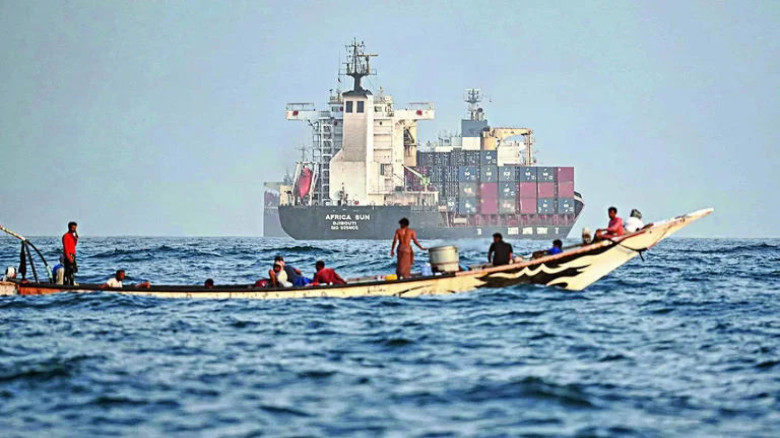
Disruption to fuel and fertiliser supplies due to the ongoing blocking of cargo vessels through the Strait of Hormuz has already lowered agricultural productivity and will hit crop yields later this year, the UN’s development chief said.
“Even if the war would stop tomorrow, those effects, you already have them, and they will be pushing back more than 30 million people into poverty,” said Alexander De Croo, administrator of the United Nations Development Programme (UNDP).
Meanwhile, Finance and Planning Minister Amir Khasru Mahmud Chowdhury in his budget speech said that in line with this objective, the Government aims to reduce inflation to 7.5 per cent and raise GDP growth to 6.5 per cent in the upcoming fiscal year. These targets are designed to ensure stability, enhance purchasing power, and improve living standards.
Meanwhile, the Asian Development Bank (ADB) has cut Bangladesh’s economic growth further to 4 percent for the current fiscal year 2025–26 from its previous projection of 4.7 percent amid a fuel price spike and disruption in global supply chains due to the war in the Middle East.
The ADB said the economy might pick up and grow by 4.7 percent in the next fiscal year 2026–27, according to the latest Asian Development Outlook (ADO) April 2026 released today.
This is the third time the ADB has revised down its Gross Domestic Product (GDP) growth forecast for Bangladesh.
The Manila-based lender in December forecast 4.7 percent GDP growth in the current fiscal year, down from its September forecast of 5 percent. In April last year, the ADB had projected 5.1 percent growth for the same year.
The current growth outlook reflects a recovery in consumption and investment as political uncertainty eases after the general election. Temporary supply chain disruptions linked to conflict in the Middle East affected activity in the last quarter, but their impact is expected to fade, the ADB said in a press release
Finance and Planning Minister Amir Khasru Mahmud Chowdhury in his speech said “ In recent years, Bangladesh’s economy has experienced significant volatility, external pressures, and deep-rooted structural challenges. To appreciate the magnitude of the current situation, it is important to reflect on our past performance. During the final fiscal year of the BNP Government (FY 2005–06), GDP growth stood at a strong 6.78 per cent, supported by a vibrant and productive industrial sector. The economy was stable, with a balanced relationship between national investment and savings. In contrast, the period under the fascist Government has been marked by a steady economic slowdown. GDP growth declined to 5.78 per cent in FY 2022–23, further fell to 4.22 per cent in FY 2023–24, and has now eased to 3.49 per cent in FY 2024–25.
Foreign direct investment (FDI) in Bangladesh has not shown a high positive scenario during the last two years, top business leaders, policy-makers and bankers said.
Leaders of the Foreign Investors Chambers of Commerce and Industry (FICCI), Bangladesh German Chamber of Commerce (BGCCI), France Bangladesh Chamber of Commerce and Industry, Japan Bangladesh Chamber of Commerce and Industry (JBCCI), Swiss-Bangladesh Chamber of Commerce and Industry, Dutch -Bangla Chamber of Commerce and Industry (DBCCI), Thai- Bangladesh Chamber of Commerce and Industry (BTCCI), American Chamber of Commerce (AmCham), Spain Chamber of Commerce and Industry (SBCC) and Korea -Bangladesh Chamber of Commerce and Industry (KBCCI) have expressed positive signals to the present budget proposals.
The United Kingdom, the USA, the western countries, South Korea and China are major investors in Bangladesh , according to the Bangladesh Bank, Bangladesh Investment Development Authority, Bangladesh Export Processing Zones Authority (BEPZA).
“The deep engagement of business leaders, Bangladesh diplomats abroad, Bangladeshi diaspora and the government policy support can improve the situation and regain reputation of the country,” said a leader of the Bangladesh Garment Manufacturers and Exporters Association (BGMEA).
Finance and Planning Minister Amir Khasru Mahmud Chowdhury said “ As I mentioned earlier, during fascist rule, economic policy and planning were often shaped by narrow interests rather than national priorities. Consequently, the resources of the country were concentrated in the hands of a limited group of vested interests through corruption and systemic inefficiencies, while macroeconomic weaknesses were obscured through the presentation of misleading statistical narratives. Going forward, we aim to transform Bangladesh into a one- trillion-dollar economy by 2034, driven by investment, productivity and job creation. At the same time, we seek to democratise economic opportunities across society, enabling us to harness the Demographic Dividend and the longevity Dividend and translate them into a Democratic Dividend.
Amir Khasru Mahmud Chowdhury said” In the aftermath of more than fifteen years of struggle against tyranny and fascism, Bangladesh has once again embarked on a renewed democratic journey, paved by the sacrifices and bloodshed of the historic mass uprising of students and citizens in 2024. On 12 February 2026, following a free, fair, credible and peaceful national election on 12 February 2026, the people of Bangladesh vested a BNP-led government with a two-thirds majority. Today I have the honour of standing before this august Jatiya Sangsad been entrusted with the responsibility of the Ministry of Finance, to present the first national budget of this newly elected government. “
At the outset, I pay my deepest respects to the heroic martyrs, to the women who suffered unspeakably and to all those who sacrificed for our independence. I also pay tribute to the martyrs who laid down their lives in the long struggle for democracy since our independence, as well as to the victims who suffered enforced disappearances, political violence, targeted attacks, arbitrary persecution, and grievous injuries in the pursuit of democratic rights and justice. Their sacrifices, courage, and resilience have expanded the horizons of democracy, strengthened the cause of fundamental rights, and renewed our collective hope for a just, free, and prosperous Bangladesh
This downward trend has been driven by a combination of factors, including sector-wide corruption, external shocks, rising inflation, and severe mismanagement and structural weaknesses in the financial sector. Elevated interest rates, persistent energy constraints, weakening investor confidence, and governance challenges have together dampened private-sector investment. At the same time, rising prices have significantly eroded the purchasing power of ordinary citizens, making the cost of essential goods and services increasingly burdensome in daily life.
The FM in his budget speech said “ The capital market has been systematically devastated by catastrophic mismanagement, institutional scams, rampant irregularities, and fundamentally flawed policy interventions, culminating in the absolute erasure of investor confidence. History proves that whenever the BNP has steered the Government, the banking, financial, and capital markets have remained entirely stable and free from such manufactured crises. The numbers reflect the scale of recent destruction: in January 2024, total market capitalization stood at Tk. 7,51,734 crore, but by April 2026, it had bled out to Tk. 6,85,119 crore. Over this same period, the DSE General Index collapsed from 6,153 to a low of 5,287. This trend suggests that key elements essential for a well-
functioning capital market, such as transparency, accountability, market depth, and a strong institutional framework for long-term financing, have yet to be sufficiently strengthened and consolidated.