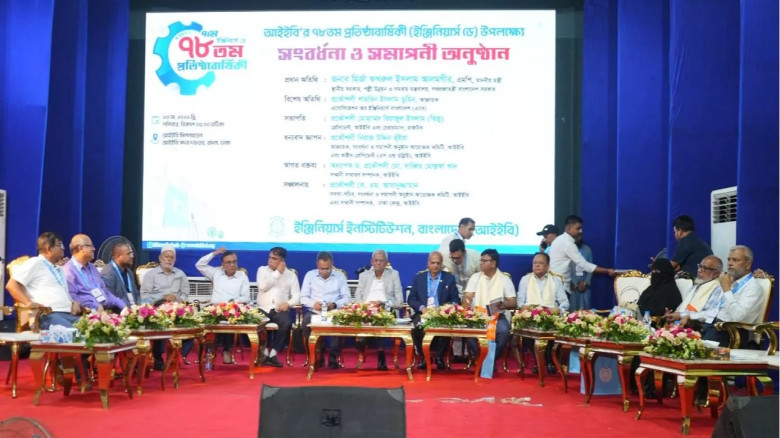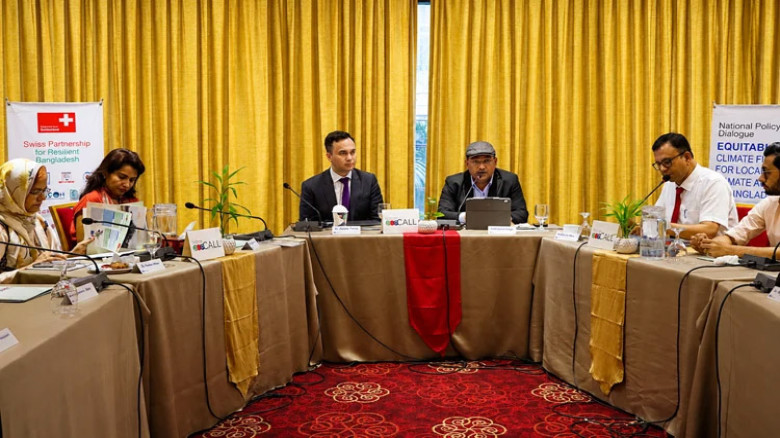


A seminar titled ‘Climate-Resilient and Eco-Friendly
Planning’ was held on the occasion of World Environment Day 2026 at the BIP
Conference Hall located at Planners Tower in the capital on Saturday, a press
release said.
BIP Vice President Planner Vice President-1 Planner Sheikh
Muhammad Mehedi Ahsan moderated the seminar and BIP President Planner Dr.
Muhammad Ariful Islam presided over the seminar. Dr. Nurun Nahar, Additional
Secretary (Development Division) of the Ministry of Environment, Forest and
Climate Change and Dr. SM Jobaidul Kabir, Joint Head of the General Economics
Division (Delta Division) of the Bangladesh Planning Commission were present as
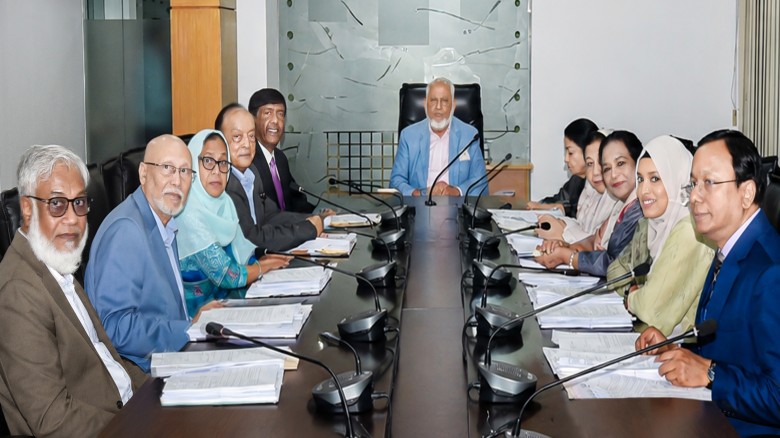
special guests. The seminar was also attended by board members of the
Bangladesh Institute of Planners (BIP), planners, and various professionals.
Bangladesh Institute of Planners (BIP) Vice President
Planner Dr. Farhana Ahmed said in her welcome speech that Bangladesh is one of
the most vulnerable countries in the world to the adverse effects of climate
change. Planned and science-based development is essential to address
multidimensional risks such as sea level rise, floods, droughts, cyclones, and
heat waves. She mentioned that if the country can be built through
climate-resilient and environmentally friendly planning, it will be possible to
ensure a safe and sustainable Bangladesh for future generations. She expressed
the hope that more opportunities will be created for planners to utilize their
knowledge, skills, and professional experience to address the challenges of
climate change and their active involvement in policy and planning at the
national level will be ensured.
Planner Naima Islam Mim said in her keynote speech that
air pollution has become a serious challenge for public health and the
environment in industrial areas of Bangladesh, especially in the Savar region.
PM2.5, CO₂, SO₂, NOₓ and various heavy metals emitted from industrial plants
are seriously affecting the air quality. As the conventional pollution control
methods are expensive and operationally complex, the need for environmentally
friendly, sustainable and low-cost alternative solutions is increasing. He
highlighted the results of his research titled ‘Lichen-Based Bio Management of
Industrial Air Pollution’ and said that lichens are capable of absorbing heavy
metals like lead (Pb) and copper (Cu) from the air. The study showed that after
two months of staying in industrial areas, the concentration of heavy metals in
lichen samples increased significantly, which proves its effectiveness in
absorbing air pollution. At the same time, lichens can also act as an effective
bio-indicator in detecting changes in air quality. In light of the research, he
emphasized on encouraging lichen cultivation and conservation in industrial
areas, introducing lichen-based biomonitoring systems in air quality monitoring
and incorporating nature-based solutions in environmental management. He also
called for the Department of Environment, industries and research institutes to
undertake lichen-based air pollution management activities and conduct more
extensive research on this subject in a coordinated effort.
In another keynote speech presented at the seminar, Md.
Shibli Sadiq, PhD, highlighted the importance of the concept of
‘Implementability’ in planning and implementing projects to combat climate
change. He said that while the conventional Feasibility Study, Cost-Benefit Analysis
(CBA), Environmental and Social Impact Assessment (ESIA) and Strategic
Environmental Assessment (SEA) in evaluating the effectiveness of climate
programs provide an idea of the potential outcomes of the project, they do not
provide adequate guidance in assessing the implementability. He identified
several important challenges in implementing climate programs. These include
lack of institutional coordination, limited funding and capacity at the local
level, weakness in large-scale application of research-based innovations, and
lack of social trust and participation. He also mentioned the lack of political
priority and lack of coordination among the relevant institutions as one of the
main obstacles to implementing climate programs. He said that it is necessary
to include an Implementability Assessment from the very beginning of the
formulation and evaluation of climate programs. In this evaluation,
institutional implementation capacity and social acceptability should be
considered with equal importance. In addition, it is possible to increase the
possibility of implementing the plan by assessing the capacity, interest and
participation of the relevant institutions and communities using the Motivation
and Ability (MOTA) Framework. He mentioned that if such an approach is adopted,
climate adaptation and water management activities will be more effective,
sustainable and realistic.
Biodiversity and Conservation Expert and Consultant Environment, Climate Change and Research System, Dr. Hasib Muhammad Irfanullah said that although there has been talk of forming a fund for biodiversity conservation since 2016, no effective allocation has been made so far. He called for giving importance to the interrelationship between space and biodiversity in planning. He further said that biodiversity should be included in every step of the plan. He also said that the involvement of planners is very important in the implementation of various government manifestos and action plans.