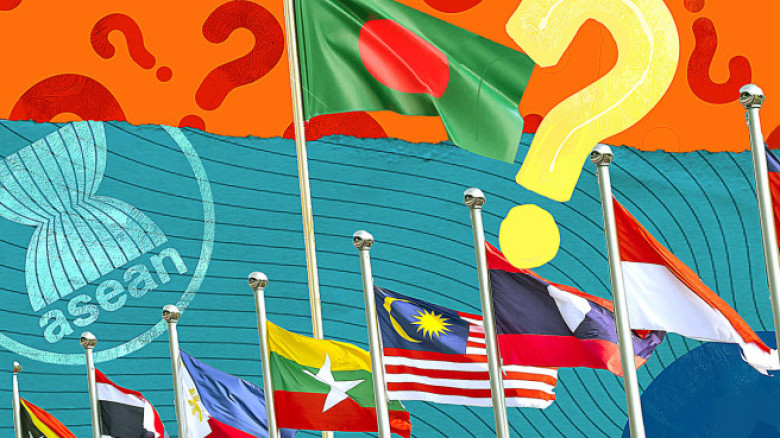

In the changing global scenario amid war in the middle-east
the new BNP government should increase economic engagement with ASEAN
countries, policymakers, economists, business leaders said.
The war in the middle-east, low production of gas,
increasing dependency on imported LNG and high price of petroleum products and
a gradual increase in energy consumption have triggered an energy crisis in the
country.
Professor Dr. Ijaz Hossain, a former professor in the
Department of Chemical Engineering at Bangladesh University of Engineering and
Technology (BUET) and former Dean of the Faculty of Engineering at BUET, and
also an expert in energy and sustainable development, while talking to this
correspondent said the government should give top priority to energy and
banking sectors to ease crisis in the national economy.
Dr Ijaz Hossain who has worked extensively on energy
efficiency, renewable energy, and environmentally friendly production, said
that the government should delay implementation of some mega projects to come
out of energy and banking crises as the country is going through nowadays.
Professor Ijaz Hossain said that Bangladesh is
primarily dependent on imports of oil
and diesel. Proper gas exploration has
not been carried out in the last 10-15 years. The country now imports about 30
percent of its gas requirement in the
form of liquefied natural gas (LNG).
“When we add everything together, including gas and coal, we
have to import around 60 percent of our total energy. If the current situation
continues and we fail to increase gas supply, we may have to import as much as
90 percent of our energy by 2030. This is becoming a heavy burden on our
economy,” said Ijaz Hossain, professor of Emirates of Bangladesh University of
Engineering and Technology (BUET.
Professor Dr. Ijaz Hossain said given the present scenario
and civil war in Myanmar, Bangladesh can work with Myanmar regarding gas import
on mid-term and long-term basis. The exploration of new gas in Myanmar, the
construction of a gas pipeline through Myanmar to Bangladesh and above all a
energy deal are a matter of long term
issues. Besides, the security issue is also important as Myanmar has lost
control over a major portion of its territory to rebels in its country, said
Professor Dr Iajaj Hossain.
The government should mull over sitting with stakeholders
concerned like top business leaders, leading exporters, geologists, teachers
concerned of BUET, CUET, KUET, RUET, Dhaka University, Chittagong University,
Rajshahi University, Khulna University, North South University, Independent
University, BRAC University, American International University of Bangladesh (AIUB) on the
regular basis to prepare a short, mid and long –term policy to get a solution
to the nagging energy crisis in the coming days , said a senior professor of
Bangladesh University of Engineering and Technology (BUET)
Meanwhile, the gas exploration in Myanmar has dropped in
recent times. According to newspaper reports, total natural gas exports from
Myanmar to Thailand in 2025 dropped significantly, recording an annual decline
of roughly 18% to 20% compared to the previous year. This reduction was driven
by fast-depleting reserves and technical decline at major offshore blocks like
Yadana and Zawtika, alongside lower upstream investments under the military
administration, according to newspaper reports.
Meanwhile, Myanmar exported roughly 9.15 billion cubic
meters with a price of approx. 3.05
billion USD of natural gas in 2024, primarily to Thailand and China. According
to the estimate, Myanmar exported 50 per cent of its gas to Thailand and 25 per
cent to China.
Meanwhile, Myanmar and Thailand have agreed to step up
security along joint natural gas pipelines and explore new drilling options to
counter falling output at a major offshore field, officials said.
At the center of the talks was the security of the vital
pipeline infrastructure that connects Myanmar's gas fields to Thailand
Energy transport routes in the region have faced ongoing
stability risks, prompting both nations to prioritize joint security measures
to ensure an uninterrupted supply.
The high-level discussions also focused on arresting the
declining output at the Yadana project, a critical natural gas field in the
Andaman Sea.
Beyond immediate pipeline security and drilling, the two
sides discussed long-term investment prospects in secure deepwater offshore
projects
Meanwhile, Maynamr and Thailand recognised energy security as a strategic
priority and reaffirmed their commitment to enhancing cooperation in the energy
sector, particularly in the development of natural gas resources, in order to
ensure a stable and reliable energy supply and promote sustainable economic
development. Both sides agreed to support the continuity of existing projects
and facilitate ongoing processes related to future projects to enhance the
energy security and mutual interest of both countries.
Meanwhile, with mill production reportedly nearly halved
over the past weeks, textile millers recently urged the Prime Minister Tarique
Rahman to bring a solution to the gas crisis.
President of the Bangladesh Textile Mills Association
(BTMA) Showkat Aziz Russell in a meeting
with Prime Minister Tarique Rahman at his office in Dhaka raised the demand as
the nearly $25 billion worth primary textile sector is experiencing
multifaceted challenges primarily for gas crisis, safety in the business and
cheap import of yarn from other countries.
After the meeting, Showkat Aziz Russell, president of the
Bangladesh Textile Mills Association (BTMA), said they also discussed the
troubled banking sector and high bank interest rates.
The BTMA president announced that the association will hold
a follow-up meeting with the prime minister within the next few weeks, this
time bringing in leaders of the Bangladesh Garment Manufacturers and Exporters
Association (BGMEA) and the Bangladesh Knitwear Manufacturers and Exporters
Association (BKMEA).
Meanwhile, Bangladesh has proposed importing natural gas
from Myanmar through a pipeline as part of efforts to strengthen bilateral
energy cooperation with its neighbouring country, according to BSS
Power, Energy and Mineral Resources Minister Iqbal Hassan
Mahmood conveyed the government's interest when Myanmar Ambassador to
Bangladesh U Kyaw Soe Moe called on him at his office at the Secretariat last
week.
During the meeting, the minister said Bangladesh has
substantial domestic demand for natural gas and expressed the country's keen
interest in importing gas from Myanmar through a pipeline to help meet that
demand.
In response, the Myanmar ambassador welcomed the proposal
positively and said the possibility of supplying gas in the form of liquefied
natural gas (LNG) could also be discussed in detail.
The energy minister also responded positively to the
proposal. During the meeting, both sides expressed interest in reviving
discussions on the previous proposal to construct a pipeline from Myanmar to
Chattogram
To accelerate bilateral discussions in the energy sector,
the minister proposed a meeting between the respective energy ministers of the
two countries.
He said he would formally invite Myanmar's energy minister
to visit Bangladesh and also expressed his own interest in visiting Myanmar, if
necessary.
Recalling Prime Minister Tarique Rahman's recent visit to
China, the minister said a proposal had been made for a
China-Myanmar-Bangladesh corridor.
In this context, he said, the establishment of a pipeline
between Bangladesh and Myanmar could play a supportive role.
The two sides also discussed strengthening long-term trade
relations and expanding energy cooperation between Bangladesh and Myanmar.
The minister said there are many potential areas for
cooperation between the two countries. Referring to the "Neighbour
First" policy, he conveyed Prime Minister Tarique Rahman's sincere
commitment to enhancing bilateral relations.
The Myanmar ambassador said the existing Bangladesh-Myanmar
Joint Technical Committee could convene a fresh meeting to review the proposal.
State Minister for Power, Energy and Mineral Resources
Aninda Islam Amit, Energy Secretary Mohammad Saiful Islam and Power Secretary
Mirana Mahrukh were also present at the meeting.
Meanwhile, the government is scrambling to secure
alternative fuel sources amid the US-Israel war on Iran, as the lion’s share of
Bangladesh’s fuel imports originates from the Middle East, said Anindya Islam
Amit, the state minister for power, energy, and mineral resources.
The middle-east countries like KSA, Qatar, UAE, Kuwait, Iraq
and Oman usually export crude oil to Bangladesh, particularly through the
Strait of Hormuz, while several Asian suppliers such as Malaysia, Singapore,
and Indonesia export refined fuel
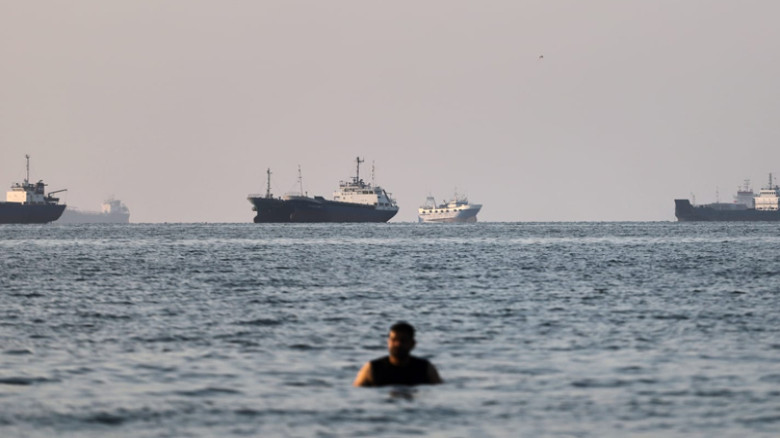
About a fifth of the world’s crude oil usually passes
through the narrow waterway, mostly to the Asian markets, so the situation
would become critical if the other countries’ refineries fail to secure crude
to refine, said officials of the Bangladesh Petroleum Corporation (BPC)
involved with the proceedings.
Sources said that Bangladesh has urged ASEAN countries like
Singapore, Malaysia, Indonesia to increase export petroleum products that are
expected to ease the crisis slightly.
During the visit of the then Prime Minister of Bangladesh
Sheikh Hasina to Brunei in 2019 and subsequently, Brunei Darussalam Sultan Haji
Hassanal Bolkiah Mu'izzaddin Waddaulah visit to Bangladesh in 2022, both
counties signed several memoranda of understanding including energy sector.
Sources in the energy sector said despite high-level visits during the last
seven years, energy talks between Bangladesh and Brunei had no headway. The war
in the middle-east and global energy crisis have pressed Bangladesh to
negotiate with Brunei in the sector and this is likely to ease some energy
crises.
Diplomats working in Bangladesh said that ASEAN countries
will work to increase economic engagement with the new Bangladesh government.
Meanwhile, Bangladesh’s export to ASEAN countries remain
insignificant over the years despite the government initiatives to boost export
beyond the traditional markets of USA, European Union (EU), UK, Canada, Japan
and Australia, said policy-makers, business leaders and diplomats
Bangladesh's exports in the fiscal year 2024-2025 (July
2024-June 2025) reached approximately $48.28 billion, showing an 8.58%
year-on-year growth, driven primarily by strong Readymade Garments (RMG)
growth, according to Export Promotion Bureau of (EPB) Bangladesh’s total export
to ASEAN countries hover at 1.00-2.00 per cent in the same period and stands
less than one billion US dollars, according to Export Promotion Bureau of
(EPB).
The member countries of the Association of South-East Asian
Nations (ASEAN) exported goods worth 10529.8 million US dollars (16.7% of total
import) to Bangladesh during 2023-24
fiscal year as against USD 11349.8 million (16.6% of total import ) during the
preceding year.
Bangladesh should explore new markets and new products with
a view to reducing dependence on traditional beyond the traditional markets of
USA, European Union (EU), UK, Canada, Japan and Australia, said a top officer
of Export Promotion Bureau(EPB)
President of the Bangladesh Chamber of Industries (BCI)
Anwar-ul Alam Chowdhury (Parvez) said that the country's total exports to ASEAN
countries will increase gradually provided Bangladesh signs a free trade
garment (FTA) with the region.
Anwar-ul Alam Chowdhury (Parvez) is the Managing Director of
Evince Group, one of the largest garment producers in Bangladesh. He was also president of Bangladesh Garment
Manufacturers and Exporters Association of Bangladesh (BGMEA)
Former president of the Bangladesh –Malaysia Chamber of
Commerce and Industry (BMCCI) Alamgir Jalil while talking to this correspondent
said that Bangladesh can groom human sources to cater to the Malaysian labour
market. He said that Bangladesh has exported semiconductors to Malaysia. He said that Mohammed Enayetur Rahman,
President and CEO of ULKASEMI, has one office in Bangladesh and three offices in the USA.