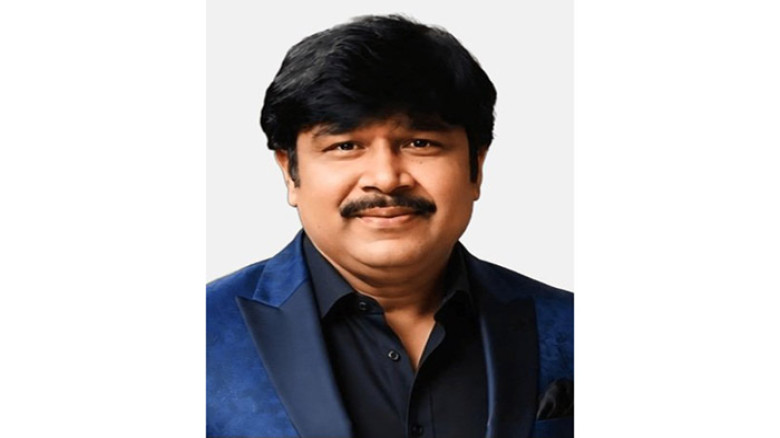
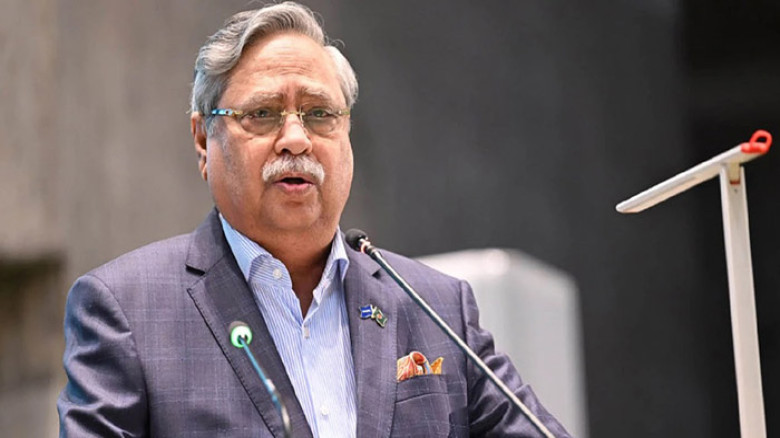

DHAKA : President Mohammed Shahabuddin resigned from
office on Friday, citing ill health, bringing an early end to his five-year
term that was due to expire in April 2028, reports UNB.
He submitted his resignation letter to Speaker Hafiz Uddin
Ahmad in the afternoon, said his Press Secretary M Sarwar Alam.
In the letter, Shahabuddin stated that he is seriously
ill. “I am suffering from heart disease, hypertension, diabetes and kidney
complications. I have undergone coronary artery bypass surgery.”
Mentioning that he was diagnosed with a condition known as
autonomic neuropathy, he said he occasionally loses consciousness for brief
periods as a result of this illness.
“Due to these medical conditions and the resulting
physical and mental incapacity, I am no longer able to discharge the
responsibilities of the important constitutional office of the President. I
require long-term medical treatment,” Shahabuddin said, adding that under these
circumstances, he stepped down from the office of the President in accordance
with Article 50(3) of the Constitution.
Under Article 54 of the Constitution, the Speaker will now
act as acting President until a new head of state is elected.
Around 4:26 pm, a vehicle designated for the acting
President, along with two Special Security Force (SSF) protocol vehicles,
arrived at the Jatiya Sangsad Bhaban.
The Speaker will address a press conference at the Jatiya
Sangsad Bhaban shortly.
Hafiz Uddin returned home on Friday after cutting short
his visit to Thailand amid growing speculation over the President’s
resignation.
According to Article 123(2) of the Constitution, a new
President must be elected within 90 days if the office falls vacant due to
resignation, death or removal. Article 48(1) provides that the President is
elected by the members of parliament.
Shahabuddin was elected unopposed as Bangladesh’s 22nd
President with the nomination of the Awami League and took office on April 24,
2023. His constitutional five-year term was scheduled to end in April 2028.
Following the July mass uprising, which led to the fall of
then Prime Minister Sheikh Hasina on August 5, 2024, Shahabuddin remained in
office during a period of sweeping political transition, including the
dissolution of parliament and the formation of the interim government, led by
Prof Muhammad Yunus.
After the uprising, several organisations associated with
the July movement and student leaders demanded Shahabuddin’s removal, staging
demonstrations and programmes, including a siege to Bangabhaban.
However, the interim government did not initiate any move
to remove him from office.
The BNP secured a landslide victory in the 13th
parliamentary election held on February 12 this year, giving the party the
parliamentary majority required to elect a candidate of its choice as the
country’s next President.
However, the BNP government, led by Prime Minister Tarique
Rahman, also did not take any move to remove Shahabuddin from the post.
With the presidency now vacant, the process of electing a
new President is expected to begin in line with the constitutional provisions.