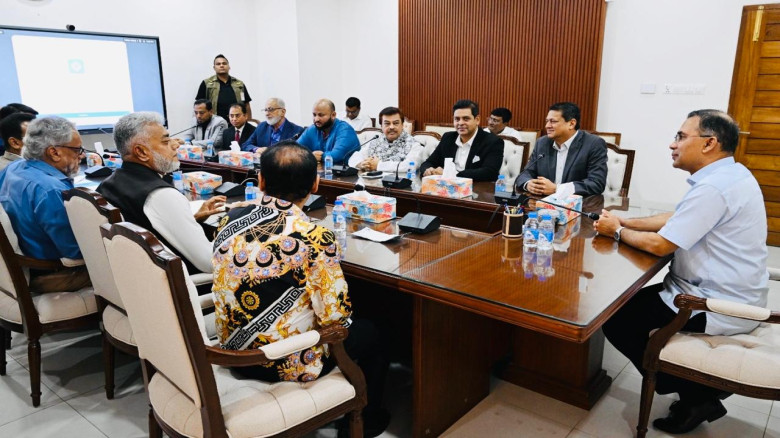

Presenting 6-point proposals for the development of the
housing sector
The Real Estate and Housing
Association of Bangladesh (REHAB) has presented 6-point proposals to the
government to develop the country's housing sector, ensure planned urbanization
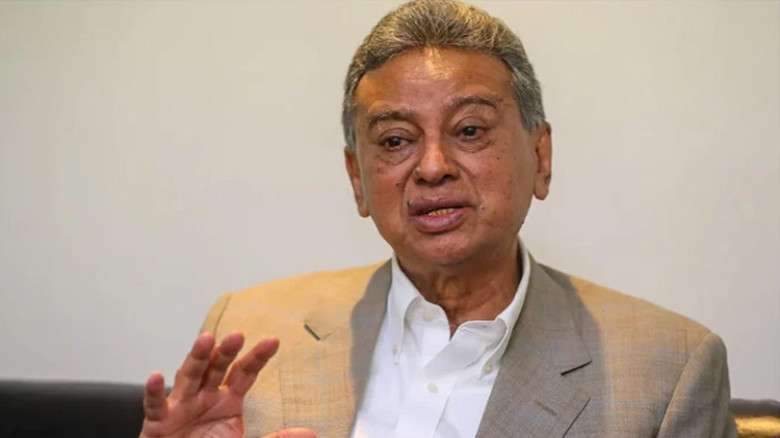
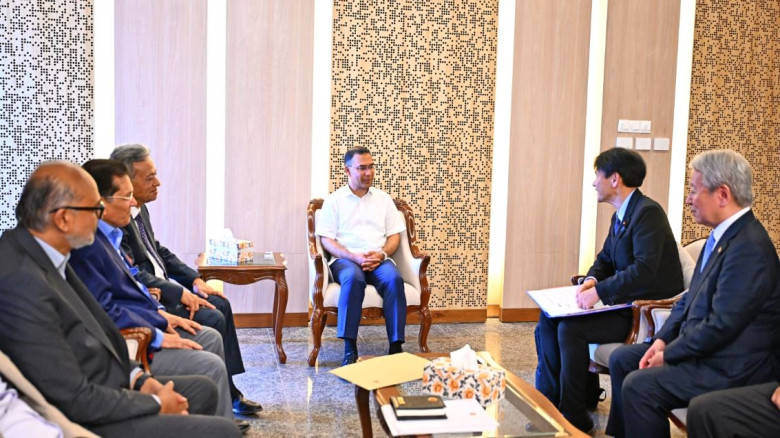
and housing for the common people. On this occasion, REHAB President Dr. Ali
Afzal, along with entrepreneurs from the housing sector, paid a courtesy call
on the Honorable Prime Minister and presented these proposals. The meeting was
held today, Wednesday (July 22, 2026) at the Cabinet Division of the Bangladesh
Secretariat. Housing and Public Works Minister Zakaria Taher Suman, and
Mostafizur Rahman Bhuiyan (Dipu), MP, and other leaders were present at the
meeting.
During the meeting, the REHAB
President said that REHAB, as the only government-recognized trade body in the
housing sector, has been working as a development partner of the government for
the development of planned urbanization and housing for more than 35 years. He
said that the housing sector is one of the most important driving forces of the
Bangladesh economy. Currently, about 5 million people have been employed in
this sector and this sector contributes 15% to the GDP. He also mentioned that
more than 300 linkage industries including cement, rods, bricks, ceramics,
tiles, glass, paints, electrical equipment, sanitary, furniture,
transportation, etc. are being operated around the housing sector.
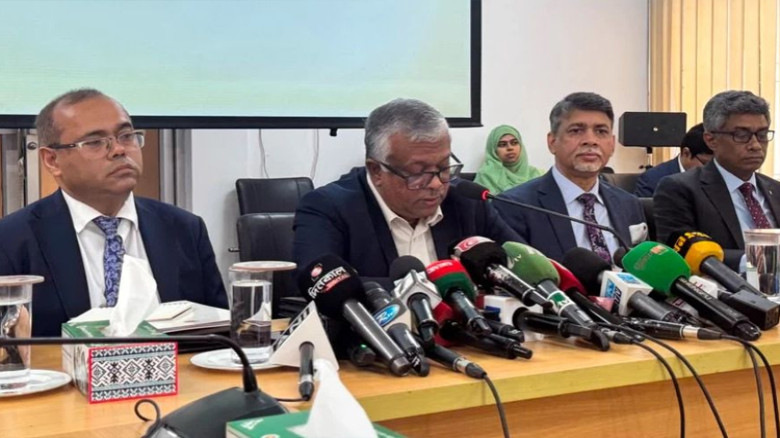
The proposals that the REHAB
President presented to the Prime Minister include
1. Formulation of a national land
zoning policy to build a planned Bangladesh.
Bangladesh's population is
continuously increasing. To ensure maximum use of limited land, it is very
important to formulate a national land zoning policy taking into account the
potential population, urbanization, and housing needs until 2100. The land of
the entire country should be scientifically classified as agricultural, forest,
water bodies, residential, commercial, industrial areas, and protected areas,
and separate usage rules should be determined for each zone. This will prevent
uncontrolled land use, agricultural land, industrialization and housing
development will be orderly and it will be easier to build a sustainable and
livable Bangladesh for future generations. To ensure housing security for
future generations through planned and vertical urbanization, it is necessary
to take long-term plans now. In that reality, the current DAP and construction
rules need to be re-evaluated and reformed to suit the times.
2. PPP-based housing program for
the low and lower-middle class.
I recommend taking up a flat and
housing construction program on the basis of public-private partnership (PPP)
to ensure affordable housing for the low and lower-middle class citizens. If
this initiative is implemented with a combination of government land, policy
support and private sector expertise and investment, it will be possible to
ensure safe and quality housing for low-income people.
3. Long-term housing loans at
single-digit interest rates for the middle class.
I humbly request the launch of a
special scheme of long-term housing loans at single-digit interest to realize
the dream of the middle-class people of the country to have their own housing.
If home loans are launched on easy terms like in the developed world, millions
of families will get the opportunity to have safe and permanent housing and
there will be a positive momentum in the housing sector.
4. Rationalization of
registration costs, VAT and tax structure.
Our country's registration costs
are the highest in Asia. I request that our country's registration costs be
reduced to 5 percent like Malaysia, China, Thailand and Hong Kong. If the tax
rate is realistic, buyers will be encouraged to register the actual transaction
value and the tendency to create undeclared money will decrease and the
government's revenue will also increase. We believe that the development of a
country is not possible without taxes, but the tax system should be realistic,
investment-friendly, fair, hassle-free and completely digital.
5. Withdrawal of 15 percent
capital tax imposed on landowners.
I humbly request the withdrawal
of 15 percent capital tax imposed on land owners on the construction of flats
in the current fiscal year. Since this tax liability is created before a person
actually derives financial benefits, additional pressure is being created on
the common people. Its effect is ultimately increasing the price of flats and
increasing the housing cost of the common buyer.
06. Complete digitalization of
the plan approval process.
I request you to take initiatives
for complete digitalization of all activities related to plan approval for
building construction and land and flat registration to reduce delays,
unnecessary bureaucratic complications and unwanted interference. This will
make the service fast, transparent, accountable and harassment-free, which will
further accelerate the development of the housing sector.
Dr. Ali Afzal informed the Prime
Minister that REHAB has always been working as a responsible partner in the
government's development journey and is keen to do so in the future. He
expressed hope that if these proposals are implemented, the housing sector will
become more dynamic and it will be easier to fulfill the dream of housing for
the middle class. At the end of the meeting, the REHAB President sought the
Prime Minister's kind consideration and necessary guidance.
Prime Minister Tarique Rahman
said that the country's housing industry is one of the driving forces of the
national economy. The development of this sector is very important for the
overall economic growth of the country. The government is working to create a
transparent, accountable and investment-friendly environment where the
development of the housing sector will be planned, sustainable and
corruption-free.
The Prime Minister said that
urbanization should not be limited to Dhaka; other regions of the country
should be given equal importance.