
REHAB presents rational proposals to solve various problems in the housing sector including DAP revision, FAR increase, STP establishment, setback A high-level exchange meeting has been held between the Capital Development Authority (RAJUK) and the Real Estate and Housing Association of Bangladesh (REHAB) with the aim of resolving existing complications in the planned urbanization of the capital, sustainable development of the housing sector and implementation of DAP, a press release said.
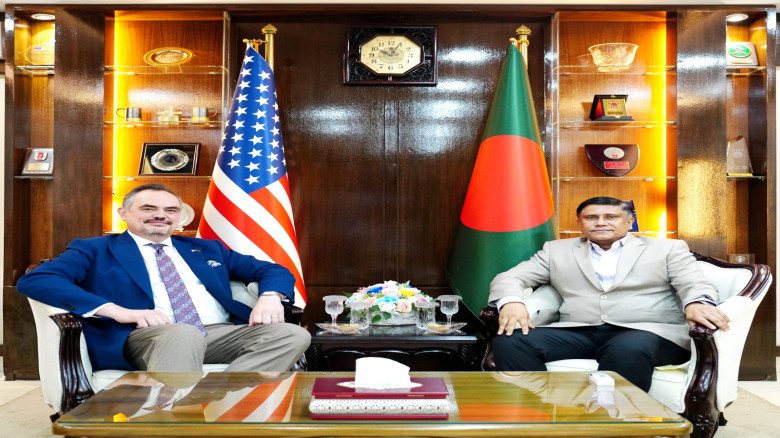
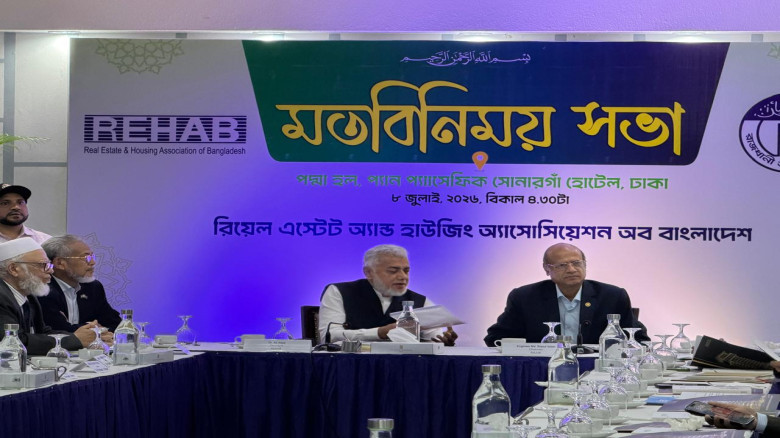
The meeting was held at the Padma Hall of the Pan Pacific Sonargaon Hotel in Dhaka at 4:30 pm on Wednesday (July 8). More than 20 senior officials and representatives of RAJUK participated under the leadership of RAJUK Chairman Engineer Md. Riazul Islam.
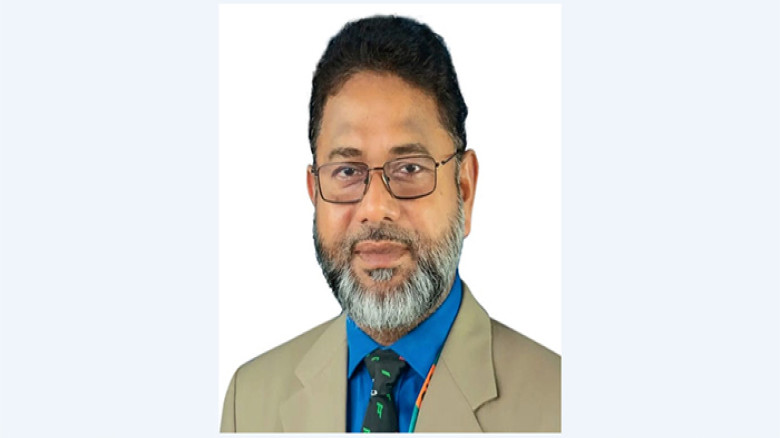
On the other hand, REHAB President Dr. Ali Afzal. The meeting was attended by the Board of Directors of REHAB (2026–2028)
President Dr. Ali Afzal, Senior Vice President Abdur Razzaque, Vice Presidents, Board members and former President of REHAB Engineer Abdul Awal, former President Tanvirul Haque Probal, Managing Director of BTI FR Khan, Vice Chairman of Rupayan Group Mahir Ali Khan Ratul, Member of Parliament M Fakhrul Islam, former leaders of REHAB and leading housing entrepreneurs of the country were present on behalf of REHAB.
The meeting discussed in detail the existing crisis in the country’s housing industry, the challenges of planned urbanization and various practical problems arising from the implementation of DAP. On behalf of REHAB, the problems arising at the field level in the implementation of various provisions of DAP were highlighted and logical and realistic amendments were demanded. A day-long workshop will be held on this issue afterwards.
A detailed exchange of views was held on the issues of increasing FAR (Floor Area Ratio), reconsidering the provisions related to setback, expanding the scope of construction of high-rise buildings, the reality of setting up STP (Sewage Treatment Plant), flexible application of the policy according to the size and location of the plot, simplifying the construction approval process and removing existing obstacles in housing development.
Dr. Ali Afzal, Rehab, said that some provisions of the current DAP are making housing development activities complicated in practical application. As a result, on the one hand, the implementation of housing projects is being hampered, while on the other hand, the cost of building flats for the common people is increasing. In addition to ensuring planned urbanization, formulating policies consistent with reality is the need of the hour.
At the meeting, Rehab emphasized the need to increase FAR in a rational manner considering international standards, modern construction technology, adequate fire safety measures, environmental balance and improved infrastructure. At the same time, emphasis was placed on planned vertical urbanization to ensure the best use of the limited land in the capital.
In addition, a call was made to formulate flexible policies for the establishment of STP, considering the type of project, amount of land, technical capability and practical applicability. The need to reconsider the obligation to establish STP, especially in 5-katha or smaller projects, was also highlighted. At the same time, a proposal was made to reconsider various technical conditions including setbacks.
In the meeting, the RAJUK chairman said that an initiative has been taken to bring the construction plan approval deadline to 30 working days to simplify services and reduce harassment.
He also said that work is underway to formulate new policies for operating share-based businesses in the housing sector, which will play an important role in ensuring transparency, accountability and good governance in the sector.
In addition, the meeting mentioned that the issue of assigning the responsibility of issuing occupancy certificates after the completion of building construction to REHAB is also being positively considered, so that the process of issuing certificates for buildings constructed in a qualified and compliant manner can be made faster, more effective and participatory.
REHAB leaders said that the country’s housing industry is one of the driving forces of the national economy. This sector directly and indirectly employs about 5 million people and more than 269 linkage industries are involved. Therefore, taking realistic, investment-friendly and timely policy decisions is very important to ensure sustainable development of the housing sector.
In the meeting, both parties expressed their commitment to work jointly for RAJUK and REHAB in the interest of the country. Both parties agreed to organize such high-level exchange meetings regularly in the future for the development of the housing sector, creation of an investment-friendly environment, ensuring planned urbanization and formulating people-friendly policies.