

USA sanctions on Iran likely to go
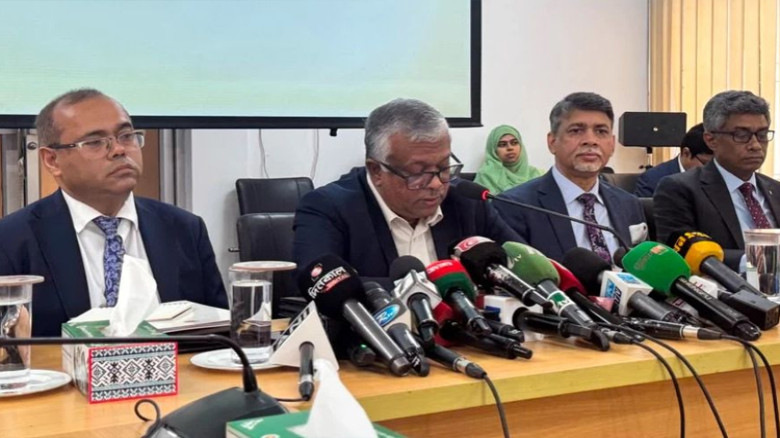
Bangladesh’s economic engagement with Iran, a major producer
of oil and gas in the world market, is likely to reach 500- 1,000 million US
dollars within years if the USA and western counties lift sanctions on Iran,
said economists, business leaders and leaders of the Bangladesh Association of
the International Recruiting Agencies (BAIRA) and Bangladesh Garment
Manufacturers and Exporters Association (BGMEA).
Bangladesh sees high economic potentials with Iran provided
USA and western countries lift economic sanctions on the Persian country, said
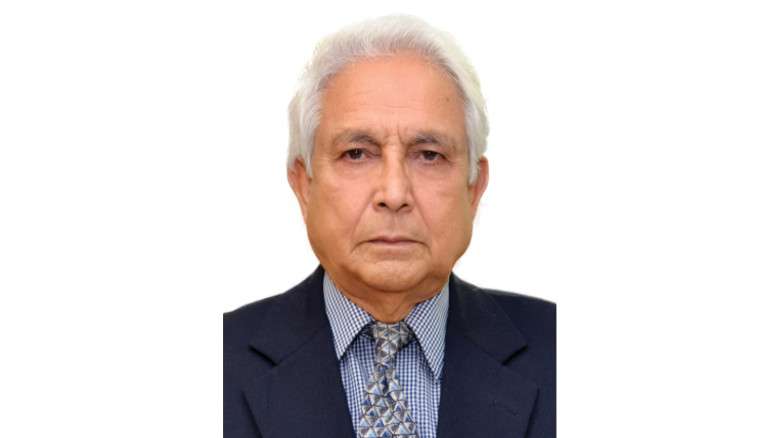
economists, a said professor of the economics department of the Dhaka
University while talking to this correspondent
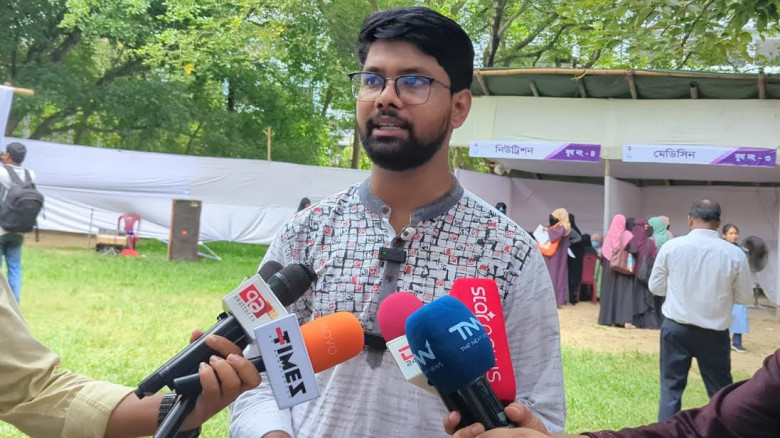
Mohammed Kamal Uddin, chairman of Torque Group, and a
leading exporter of the
readymade garments, while talking to this correspondent in
the city on Friday the Gulf countries are very prospective markets to
Bangladeshi exporters, though the penetration in the markers are very
insignificant.
Mohammed Kamal Uddin, chairman of Torque Fashions Limited,
Torque Designs Limited and Torque Apparels and also a leader of Bangladesh
Garment Manufacturers and Exporters Association (BGMEA) said that Bangladesh is
putting high concentration on USA and EU markets. In the changing global market, Bangladesh should explore new
markets.
Bangladesh's annual exports to Gulf Cooperation Council
(GCC) countries are valued at approximately $820 million to $1.5 billion, with
the United Arab Emirates (UAE) and Saudi Arabia acting as the primary
destinations. Roughly 60% of these exports are readymade garments (RMG), while
the remainder consists of agro-products, jute, and ceramics. Driven by knitwear
and woven garments, the Gulf counties are the largest sector, though a large
$10 billion untapped apparel market remains in the region.
Iran 2026 population is estimated at 93,168,497 people at
mid-year. Iran's population is equivalent to 1.12% of the total world
population.
Iran ranks number 17 in terms of the population in the
world.
The reconstruction of Iran will involve billions of dollars
and thousands of workers that Bangladesh
can meet, said a leader of the Bangladesh Association of the
International Recruiting Agencies (BAIRA)
Sources said that Bangladesh used to send doctors and nurses
to Iran in the 70s before the western countries imposed sanctions on the
Persian country.
However, nowadays Bangladeshi doctors are not interested in
grooming their career in the Gulf countries. But Bangladesh can export nurses
to the Persian country, said a leader of the Bangladesh Association of the
International Recruiting Agencies (BAIRA)
Meanwhile, in the context of the changing global realities,
Bangladesh has sought long-term cooperation in the energy sector with Angola,
Sub-Saharan Africa's second-largest oil producer. Iran has been one of the largest exporters of
oil.
The massive reconstruction in Iran will require thousands of
workers in Iran that Bangladesh can share some portion of the manpower market
in the Gulf countries, said a BAIRA leader
Meanwhile, the United States and Iran have electronically
signed a memorandum of understanding to extend their ceasefire and reopen the
Strait of Hormuz, according to Al Jazeera Staff, AFP and Reuters
Iran’s Ministry of Foreign Affairs spokesperson, Esmaeil
Baghaei, said late on Wednesday that the agreement had gone into effect.
“The text of the Islamabad Memorandum of Understanding was
finalised with the signatures of the presidents,” Baghaei told the news agency
IRNA. “Now it is time to test the implementation of the agreement.”
Trump told reporters that he had signed the memorandum with
Iran at the Palace of Versailles, near the French capital, Paris.
“It’s signed,” Trump said as he left Versailles. “I signed
it in Versailles,” he added. “Just signed it.”
The White House later confirmed that Trump had signed the breakthrough agreement.
Since February 28, the US and Israel have been jointly
engaged in a war against Iran, though a temporary ceasefire suspended much of
the most intense fighting on April 8. This agreement extends the ceasefire for
60 days, with Iran gradually reopening the strait and the US lifting its
blockade of Iranian ports.
The agreement paves the way for further negotiations over
Iran’s nuclear programme. In return, the US will move to waive some
wide-ranging sanctions against Iran.
Given that both sides signed the agreement electronically,
Baghaei noted that there would not be a signing ceremony on Friday in Geneva,
Switzerland, as had previously been expected.
Negotiating teams, however, still plan to be in the Swiss
city. A decision on a possible in-person meeting between them is expected in
the coming hours, though for now such plans are paused, according to Baghaei.
Meanwhile, Iran, the third largest producer in the
Organization of the Petroleum Exporting Countries, pumps about 4.5% of global
oil supplies. Iran's output is about 3.3 million barrels per day of crude, plus
1.3 million bpd of condensate and other liquids, according to Reuters.
Iran's domestic refineries have a capacity of 2.6 million
bpd, according to the consultancy FGE.
In 2025, it exported nearly 820,000 bpd of fuel, including
LPG, according to Kpler, slightly below 2024 levels.
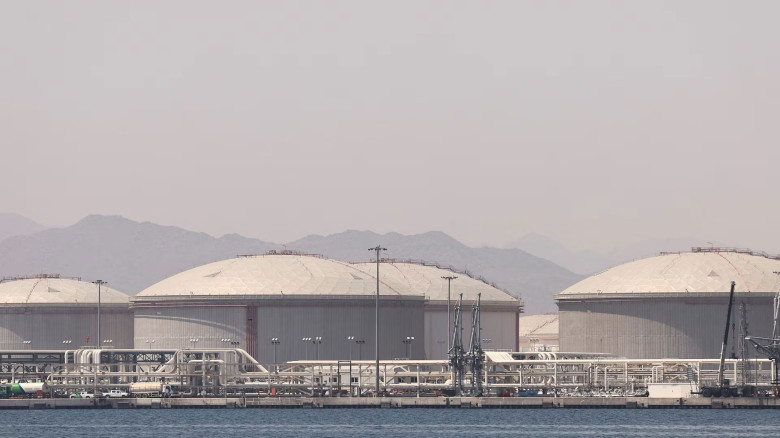
Iran's oil and gas production facilities are concentrated in
southwestern provinces: Khuzestan for oil and Bushehr for gas and condensate
from South Pars.
It exports 90% of its crude via Kharg Island, for shipping
through the narrow Strait of Hormuz.
Analysts say Saudi Arabia and other OPEC members could
compensate for a drop in Iranian supply by using spare capacity to pump more,
even though this spare capacity has been shrinking due to output increases the
producer group has undertaken over the past year.
Chinese private refiners are the main buyers. The U.S.
Treasury has imposed sanctions on some Chinese refiners for purchases of
Iranian oil.
China says it does not recognise unilateral sanctions
against its trade partners, but its purchases of Iranian crude have declined.
As Iran also seeks to protect its stocks from potential U.S.
strikes, it has built p a record amount of oil on the water of about 200
million barrels, equivalent to about two days of global consumption, data from
Kpler published on February 27 showed.
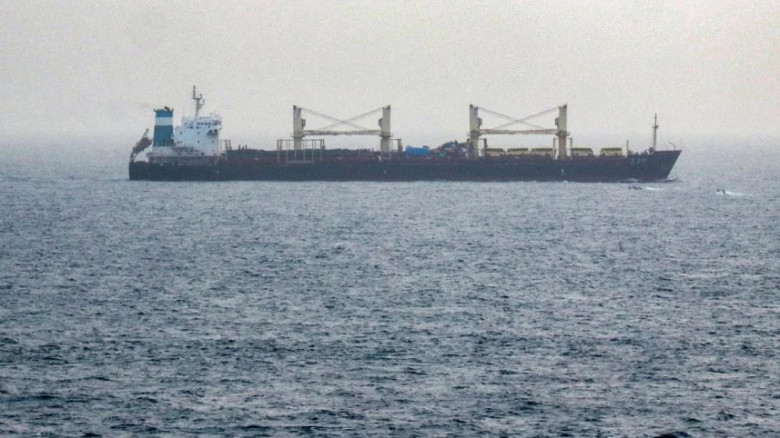
Iran has skirted sanctions for years by taking measures such
as transferring oil from one ship to another at sea and changing the origin of
the oil, to hiding tanker locations from satellites.
Iran produces natural gas from the offshore South Pars gas
field, which makes up around a third of the world's largest reservoir of
natural gas.
That was according to two people familiar with the matter
who spoke to Reuters.
Iran shares the reservoir with major exporter Qatar, which
calls its field the North Dome.
Sanctions and technical constraints have meant most gas
Tehran produces from South Pars is for domestic use.
Iran's gas production totalled 276 billion cubic meters in
2024, with 94% consumed in Iran, according to data by the Gas Exporting
Countries Forum.