
DC Zahid: Chattogram’s quiet reformer who listens
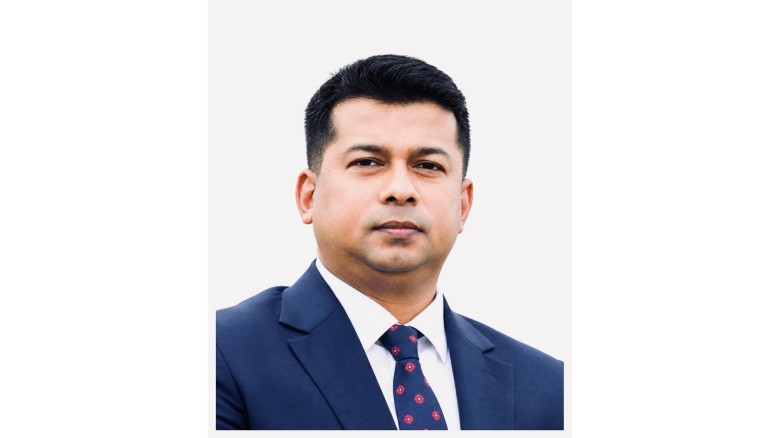
The DC who listens—and acts
From Yasmin’s auto-rickshaw to the hills and the Halda, Mohammad Zahidul Islam Mian’s initiatives in Chattogram raise a larger question: what does it take to make public administration work for ordinary citizens?
Yasmin Akter did not come to the Chattogram Deputy
Commissioner’s office asking for charity.
She arrived in the same battery-run auto-rickshaw she
drives every day to keep her family afloat.
Her husband has been unable to work since a road accident
left him disabled. With three children to raise, Yasmin must manage his
treatment, put food on the table and somehow keep the children in school.So she
drives.
Often, her three children accompany her as she navigates
the streets of Chattogram in a rented auto-rickshaw.
Her story reached Chattogram Deputy Commissioner Mohammad
Zahidul Islam Mian through a journalist. On a Wednesday, when the district
administration holds its weekly public hearing, Yasmin arrived at the DC office
with the same concerns that have shaped her daily struggle.DC Zahid
listened.But listening was not where the encounter ended.
He left his desk, walked downstairs and stood beside her
auto-rickshaw.
“Despite facing so many challenges, you never asked for
handouts or compromised your dignity,” he told her. “You are working hard,
driving this auto-rickshaw to make ends meet. That is truly commendable.”
Yasmin left that day with financial assistance for her
husband’s treatment and essential food supplies, including rice, lentils and
cooking oil. She was also encouraged to keep her children in school.
For Yasmin, it was immediate help at a difficult moment.
For the administration, however, the encounter points to a
broader question: what happens when citizens bring their everyday struggles to
the state, and how effectively can government institutions respond?
When People Bring Their Problems to Government Every
Wednesday, people arrive at the DC’s public hearing carrying problems that
rarely fit neatly into government forms.
Some bring medical reports. Others carry land documents.
Some cannot afford treatment or education, while others have spent months
caught in administrative complications.
For many, the DC office becomes an option only after other
avenues have failed.
Kurban Ali, who had lost the use of all four limbs, came
seeking an electric wheelchair. Before the hearing ended, one was purchased and
handed over to him.
Omar Faruk, a visually impaired son of a day labourer, had
secured admission to the University of Chattogram but faced uncertainty over
how he would pay for his education. The district administration stepped in with
assistance.
For the individuals concerned, such interventions can make
an immediate difference.
Yet these cases also raise a more difficult institutional
question.
Citizens should not have to depend on the personal
intervention of a senior official to secure services or assistance that
government institutions are expected to provide.
That is where public hearings can play an important role.
They provide a safety valve for people caught between bureaucratic procedures
and immediate hardship.
But one-off assistance cannot substitute for effective
social protection, accessible public services and institutions capable of
resolving problems routinely.
The real value of such hearings, therefore, lies not only
in the problems solved on a Wednesday, but also in what those cases reveal
about weaknesses in the system—and whether those weaknesses are subsequently
addressed.
That question of institutional effectiveness extends far
beyond the hearing room.
Beyond the Hearing Room Chattogram presents an unusually
demanding administrative landscape.
Illegal hill cutting, settlements on vulnerable slopes,
pressure on the Halda River, complicated land services, industrial accidents
and rapid urbanisation all require coordination among agencies that do not
always work seamlessly together.
Against that backdrop, the district administration under
DC Zahid has sought to intervene in several areas.
The range of these initiatives is noteworthy. But their lasting significance depends on something more difficult to measure: whether they produce durable improvements that continue beyond individual drives, hearings or decisions.
One of the clearest tests is the protection of
Chattogram’s hills.
Protecting Chattogram’s Hills Every monsoon revives an old fear in Chattogram. Thousands of people live on or below vulnerable hills, while illegal hill cutting further destabilises slopes already exposed to heavy rainfall.
The result is a persistent risk of landslides, displacement and loss of life. To address the problem, mobile courts have operated in high-risk areas, including Sitakunda, Akbar Shah and Bayezid. Heavy machinery used for illegal hill cutting has been seized, and legal action has been taken against offenders.
A task force has also worked on settlements in hazardous
areas, including efforts to relocate people considered at risk.Such enforcement
is necessary.Yet Chattogram’s experience also shows why periodic drives alone
cannot protect the hills.
The challenge is structural.
Preventing illegal hill cutting requires continuous
surveillance, coordination among government agencies and consequences strong
enough to deter politically or financially influential encroachers.
At the same time, relocating people from dangerous slopes requires viable alternatives. Otherwise, removing a vulnerable family from one hillside may simply move its vulnerability somewhere else.The same principle applies to another of Chattogram’s most important natural assets—the Halda River.
The Test for the Halda The Halda is not merely another river running through Chattogram. It is an ecologically important natural spawning ground for major carp species and a habitat for the endangered Ganges river dolphin.
Yet illegal sand extraction, motorised vessels and
pollution have placed the river under pressure for years.
In response, the district administration has conducted
drives against illegal dredging, sought to regulate motorised vessels and taken
action against sources of pollution.
Awareness programmes have also involved fishermen and egg
collectors whose livelihoods are closely tied to the river.
These are necessary steps.
But the health of the Halda cannot be measured simply by
the number of mobile courts conducted or dredgers seized.
The more meaningful indicators are harder to capture:
water quality, fish stocks, biodiversity and whether illegal activities
actually decline over time.
Environmental protection succeeds when enforcement becomes routine rather than episodic. That same emphasis on routine, accessible government services is visible in another area that directly affects ordinary citizens: land administration.
Making Land Services Less Painful Few interactions with
government cause ordinary citizens as much anxiety as land administration.
A mutation application, an incorrect khatian or difficulty
paying land development tax can mean repeated visits to government offices,
lost working days and prolonged uncertainty.
In Chattogram, the administration has sought to use the
government’s grievance mechanism to resolve some of these problems without
requiring citizens to repeatedly appear in person.
According to data from the Ministry of Land’s grievance
management system, 486 of 882 online land-related complaints filed in
Chattogram over a four-month period were resolved—a disposal rate of 55
percent, compared with a national average of 29 percent.
Behind those figures are individual experiences. Nuruddin of Hathazari filed a complaint online. Once the problem was resolved, his mutation record was sent to him by post.
Similarly, Shafiqul Islam of Kattali encountered
difficulties paying his land development tax. After filing a complaint, an
Assistant Commissioner contacted him by phone and helped resolve the issue.
For citizens, such interventions can reduce the time, cost
and frustration associated with visiting government offices repeatedly.
“Land-related complexities lie at the root of many
lawsuits and disputes in the country,” DC Zahid said. “We are monitoring this
closely so that citizens do not face litigation, harassment or unnecessary
suffering.”
The statement points to a central principle of administrative reform. A successful grievance system should eventually reduce the need for grievances in the first place. If the same problem repeatedly generates complaints, resolving individual cases is not enough. The process that creates those complaints must itself be fixed.
That concern with delay and responsiveness also lies behind DC Zahid’s instructions to officials. ‘Complete Today’s Work Today’ At a meeting with officials and employees in late September, DC Zahid delivered a simple instruction: citizens should not have to return tomorrow for work that can be completed today.
“It is your sacred duty to complete your assigned tasks on
the very same day,” he told them. “After all, you occupy that chair to serve
the people.”
He has also called for daily self-evaluation, surprise
inspections and greater accountability in services ranging from mutation to the
distribution of Khas land.
The message addresses one of the most common frustrations
citizens experience in public offices: delay.
For an official, an unfinished file may be one among hundreds. For the person waiting for it, however, that file may represent a home, an inheritance, a livelihood or a family’s savings.
Still, instructions from the top, however well-intentioned, have limits. Sustainable improvement requires clear service standards, transparent timelines, effective supervision and consequences when citizens face unnecessary delays or harassment.
In other words, good administration cannot depend
indefinitely on the vigilance of a single official.
That same idea—using government not merely to enforce
rules but to encourage better civic behaviour—appears in some of the district
administration’s smaller initiatives.
Small Experiments, Larger Ideas Some of the district
administration’s initiatives have been modest in scale but interesting in
conception.
At Chattogram Zoo, visitors can exchange plastic waste for
admission. Depositing 100 grams of plastic earns a visitor free entry as well
as a tree sapling.
The programme combines environmental awareness with
recreation while giving children from low-income families an opportunity to
visit the zoo.
“Profit is not the issue when it comes to shaping the
younger generation,” DC Zahid said. “This is an investment—for me, for you and
for our country.”
The administration has also focused on sports and youth participation. Chattogram recorded substantial participation in the “Notun Kuri” sports competition, with more than 181,000 students registering, according to organisers, compared with around 59,000 in Dhaka.
Officials at the Ministry of Youth and Sports have cited
field-level mobilisation as an important factor behind the turnout.
Registration figures alone do not create athletes. But bringing children onto playing fields can expand opportunities for talent development, healthy recreation and community participation.
The larger lesson is that local administration need not
restrict itself to processing files.
Within its mandate, it can experiment with ways of
encouraging civic participation, environmental awareness and healthier
communities.
But when governance is tested by a tragedy, the standard becomes much higher. Responding After Tragedy—and Preventing the Next One The administration faced a different test after 10 workers died from toxic gas exposure during ship-breaking operations in Sitakunda.
DC Zahid visited the injured in hospital and coordinated
with the parties concerned over compensation for the families of those killed.
According to officials, compensation reached the families within nine days. For a household that has suddenly lost its breadwinner, timely compensation matters enormously.
But compensation is, by definition, a response after tragedy. The more important measure of governance is whether regulators, industry owners and authorities can prevent the next death.
The ship-breaking industry has long raised concerns over
occupational safety.
No amount of efficient post-accident assistance can
replace rigorous inspections, enforcement of safety standards and
accountability for preventable deaths.
The same focus on outcomes rather than appearances can be
seen in the administration’s approach to government training programmes.
Training Must Lead Somewhere DC Zahid has questioned a
familiar weakness in government training programmes: people are trained,
certificates are distributed, photographs are taken—and little attention is
paid to what happens afterwards.
At a sewing machine distribution programme, he asked what should be an obvious question. “There must be a plan regarding where these women will work and how they will earn an income once their training concludes,” he said.
The point goes beyond sewing programmes. Public money
spent on skills development should be assessed by outcomes: whether
participants find work, increase their incomes or become economically
self-reliant.
Training should be a means to an end, not an
administrative achievement in itself.
A similar emphasis on outcomes is visible in initiatives
involving children from fishing communities, where incentives have been
announced to encourage regular school attendance.
“If we wish to change our destiny, the only medium capable
of doing so is education,” DC Zahid said.
The emphasis on practical outcomes also extends to another
area of public administration that is rapidly changing: technology.
Technology Cannot Replace Empathy The Chattogram district
administration is exploring AI-powered cameras for traffic management, while an
ICT cell is working to counter rumours and misinformation on social media.
These initiatives reflect the growing role of technology in government. But DC Zahid argues that modernisation cannot be reduced to hardware and software.
Recalling robot-assisted services he had seen in Chinese
hotels, he said, “The world is changing. What truly matters is the extent to
which we can transform ourselves and bring about changes in our thinking and
values.”
That distinction matters. A government can digitise forms, automate processes and deploy artificial intelligence. Such tools can make services faster and more transparent.
But technology cannot, by itself, make an official respect
the person standing across the counter.
Administrative reform is ultimately about both systems and culture. And understanding that approach requires looking briefly at the person behind the office.
The Man Behind the Office Born in Bhuyapur, Tangail,
Mohammad Zahidul Islam Mian studied International Relations at the University
of Dhaka.
He also earned a diploma in Russian and an MSc in Human
Resource Management from a university in the United Kingdom.
He joined the Administration Cadre through the 25th
BCS in 2006.
During his career, he has served as an Assistant
Commissioner, Assistant Commissioner (Land), Upazila Nirbahi Officer and Deputy
Secretary at the Ministry of Shipping.
Before taking charge in Chattogram, he served as Deputy
Commissioner of Rajbari and Narayanganj.
His work in Chattogram now touches areas that may appear
unrelated: hills and rivers, land records and plastic waste, sports and
education, industrial accidents and public hearings.
Yet there is a common thread running through them.
At its most basic level, public administration is about
whether citizens feel that the state works for them rather than the other way
around.
There are, of course, limits to what one Deputy
Commissioner or one district administration can accomplish.
Environmental protection requires institutions capable of
sustained enforcement.
Land reform requires transparent and predictable systems.
People with disabilities need long-term support rather than
occasional assistance.
Industrial safety requires prevention, not merely
compensation after workers die.
And administrative reform cannot be considered successful
simply because a committed official happens to be in charge.
The real test comes later: whether an initiative survives
its initiator.
If a grievance system works only because the DC personally
follows complaints, it has not yet become institutional reform.
If hills are protected only during periodic drives, they
remain vulnerable.
If public hearings are necessary because routine offices
repeatedly fail citizens, the underlying problem remains.
This brings the story back to Yasmin and her
auto-rickshaw.
A woman drove to a government office carrying the burden
of a disabled husband, three children and a household she was struggling to
keep afloat.
The Deputy Commissioner listened. Then he came downstairs. For Yasmin, that moment did not solve every problem waiting at home.
Nor should citizens have to depend on an exceptional
intervention from a senior official whenever life collides with bureaucracy.
But that brief encounter points to something worth preserving. The best public administration is not the kind that requires an extraordinary official to solve ordinary problems.
It is the kind that turns responsiveness, dignity and
accountability into ordinary features of the system.
When that happens, the distance between the citizen and
the state does not merely become shorter for one afternoon.It stays shorter.
Copyright © 2026 Daily Capital Views. All Rights Reserved.
 প্রিন্ট করুন
 সেভ করুন