
Print Date : August 24, 2026 || Published : August 23, 2026
Japanese teachers complete JICA training in Bangladesh
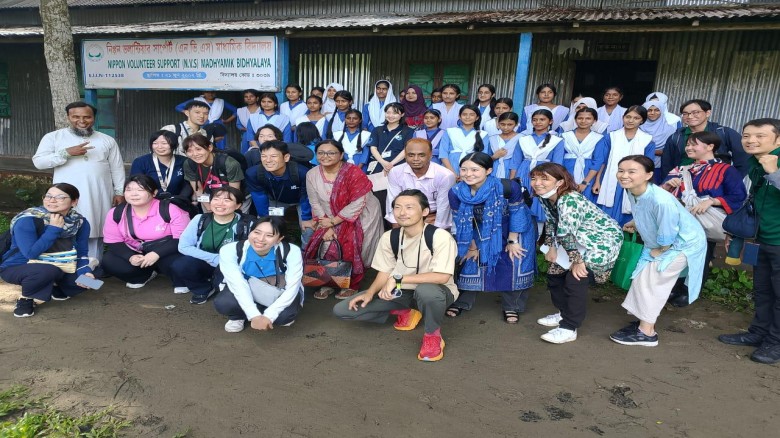
The Japan International Cooperation Agency (JICA) hosted a group of Japanese teachers in Bangladesh from August 5 to 13, 2026, as part of its “Overseas Training for Teachers” program, gaining firsthand experience of Bangladesh’s education system, infrastructure development, public services, and Japanese cooperation in the country, a press release said.
The training program aims to deepen teachers’ understanding of international cooperation and foster greater awareness of global issues among students in Japan. The program has been running for more than five decades and combines one to two weeks of overseas fieldwork and follow-up activities after participants return to Japan.
During their eight-day visit, the teachers undertook an extensive learning program in Dhaka, visiting a range of educational institutions representing different models of education in Bangladesh. They visited schools run by government, private, and non-profit organizations, the University of Dhaka, the Directorate of Primary Education, the Primary Teachers Training Institute, and a KUMON center. In addition to Dhaka, they also observed educational settings in both urban and rural areas.
The delegation also visited a Japanese company at the Adamjee Export Processing Zone, providing an opportunity to learn about Japanese business activities and industrial development in Bangladesh. They further explored major infrastructure and public service facilities, including the Dhaka MRT, public health facilities and waste management facility, gaining a broader understanding of Bangladesh’s ongoing development and the role of international cooperation.
At the JICA Bangladesh Office, the teachers received an overview of JICA’s activities and cooperation in Bangladesh, helping them connect their field visits with the wider context of Japan-Bangladesh cooperation.
The experience left a strong impression on the participants, particularly through their interactions with Bangladeshi students, teachers, professionals, and local communities.
One participant highlighted the importance of sharing the experience with the next generation, saying, “I will definitely pass on my experiences in Bangladesh to my students.” Reflecting on the overall training, another participant said, “I learned a lot throughout this whole training period. I would definitely like to come back to this country again.”
The visit also provided an opportunity for the participating teachers to experience the growing and multifaceted relationship between Japan and Bangladesh beyond the traditional development cooperation framework, through direct engagement with the country’s education, infrastructure, industry, and public services.
Following the completion of the field training, the teachers have returned to Japan and are expected to incorporate their experiences into classroom lessons and teaching materials. They are also expected to share their learnings with fellow teachers and students in their respective regions.
Copyright © 2026 Daily Capital Views. All Rights Reserved.
 প্রিন্ট করুন
 সেভ করুন