
BRAC University seminar stresses vaccination, research to tackle measles
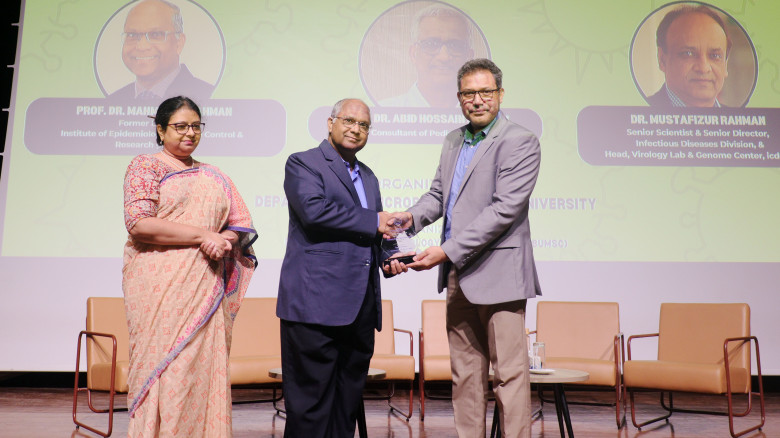
Public health and medical experts addressing a BRAC
University seminar have called for stronger routine vaccination, research-based
decision-making, and coordinated action to address the ongoing measles
situation in Bangladesh, a press release said.
The Department of Microbiology under the School of Life
Sciences and BRAC University Microbiology Student Council organized the seminar
titled “The Resurgence of Measles: Recent Outbreaks in Bangladesh and the Path
Forward” at the university auditorium on 19 July 2026.
Professor Dr Mahmudur Rahman, former director of the
Institute of Epidemiology, Disease Control and Research (IEDCR), stressed the
need for high vaccination coverage, robust disease surveillance, rapid outbreak
detection, and community engagement to build confidence in vaccines.
He also called for targeted sub-immunization activities in
areas with higher case concentrations.
Professor Dr. Abid Hossain Molla, senior consultant of the
Department of Pediatrics at the Bangladesh Institute of Research and
Rehabilitation in Diabetes, Endocrine and Metabolic Disorders (BIRDEM)
Hospital, underlined the importance of early diagnosis and timely treatment.
He said prompt medical attention for every suspected case
could significantly reduce complications and prevent unnecessary deaths among
children.
Dr Mostafizur Rahman, senior scientist and senior director
of the Infectious Diseases Division at icddr,b (the International Centre for
Diarrhoeal Disease Research, Bangladesh) and head of the Virology Laboratory
and Genome Centre, emphasized the centrality of research in understanding the
current outbreak.
He said it was critical to identify why the upsurge
occurred this year and to investigate whether changes in the virus, vaccine
effectiveness, or other contributing factors were involved.
BRAC University Pro-Vice-Chancellor Professor Arshad
Mahmud Chowdhury said preventing measles required more than having vaccines
available — ensuring they reached people effectively and building community
awareness were equally important.
He added that collaboration across public health,
microbiology and biotechnology could strengthen research, policy development
and public awareness.
In her welcome address, School of Life Sciences Assistant
Dean Professor Dr Aparna Islam encouraged students to engage in research and
innovation to contribute to public health in Bangladesh.
A panel discussion was also held as part of the seminar,
focusing on the current measles situation in Bangladesh, vaccination,
prevention strategies and the role of research in addressing public health
challenges. The session was moderated by Nadia Sultana Deen, Associate
Professor and Chairperson of the Department of Microbiology. During the
discussion, she highlighted the importance of government support for
measles-related research to better understand the current outbreak and develop
evidence-based prevention and control strategies.
Faculty members, students, and researchers attended the
event, which also included an award ceremony recognizing winners of a poster
presentation competition on measles awareness.
Copyright © 2026 Daily Capital Views. All Rights Reserved.
 প্রিন্ট করুন
 সেভ করুন