
From the very moment he started chronicling
history, Ibn Khaldun noted something profound: “When we talk about a general
change in conditions, it feels as if all of creation has shifted, as if the
entire world has been transformed into something new, almost like a fresh
creation altogether.” He was standing at a crucial junction in time,
realizing an essential truth: civilizations progress and the material aspects
of life shift, but the fundamental laws governing the universe are anchored in
the undeniable reality of the Creator.
Today, we're caught up in another whirlwind of
change. The age of rapid technological advancement has woven us into an
intricate web of material connections. Yet, beneath this complex surface, the
deeper aspects of human existence are gradually coming undone. In this
increasingly expansive and interconnected world, many of us still find
ourselves grappling with a profound lack of silence and disconnection. It’s
exhausting, really.
Today, in this age of secularism, people are
trying to strip away any mention of the transcendent. When we disconnect
morality from spirituality and start viewing ourselves as mere flukes of
biological evolution, contemporary philosophy struggles to answer that age-old
question: "How should I live my life?" Instead of meaningful
guidance, we find ourselves faced with a bleak array of minimal rules meant to
help us manage our desires and rights. Lacking a greater purpose, today’s
philosophical discourse seems caught in a tug-of-war between two pretty grim
outlooks: Trans-humanism on one side and Anarcho-Primitivism on the other.
If we truly are just accidental products of
evolution, then it follows that we lack any intrinsic value whatsoever. That’s
the view held by trans-humanists. They believe we can take charge of our own
evolution through tools like genetic engineering, cybernetics, and AI. Their
vision is one of a "superior" post-human species where distinguishing
between human and machine becomes nearly impossible.
The whole dream is built on a terrible flaw
really. If the moral value of our lives is determined by our position on the
evolutionary scale then secularism has no grounds for refusing the wholesale
exploitation of lower forms of life by a technologically advanced post-human
species. It has no language of the sacred and no soul within the human being.
On the flip side, you have the
anarcho-primitivists. They take a long look at history and argue that
technology has been the root cause of all kinds of human oppression—whether
it’s the flashy machines of today or even the first tools our ancestors used.
Their answer? Let’s "rewild." Essentially, they think we should ditch
all technology and return to our hunter-gatherer roots.
Interestingly, both sides seem to have this
almost worshipful view of technology—either putting it on a pedestal or wanting
to tear it down. Yet neither really stops to consider how tools should be used
in a meaningful way. They don’t see that technology isn’t inherently good or
evil; it’s simply a tool. Its true value hinges on how we choose to use it.
In developing a useful tech critique we need to
go back to the fundamental question of what is a tool? Rather than get too
bogged down in the rather intimidating rhetoric of technical expertise we can
turn to Aristotle's Nicomachean Ethics where he makes a clear
distinction between techne (craft), episteme (scientific
knowledge) and phronesis (prudence).
Practical wisdom is "a state grasping
the truth, a sort of reason concerned with action about things that are good
and bad for man." As for him, meaningful human activity (praxis)
may itself be an end—living well is the human good—while technology, or
production (techne), is entirely separate. As Aristotle says, "Production
has its end outside itself."
We do not develop tools or build infrastructure
simply to help developing tools or building infrastructure. We develop tools
and build infrastructure as a means of enabling human action to be human.
Technology, by its very definition, is an instrument of human action and
because it is never an end in itself, technology can never be the telos
of our lives. A society that has a flawed understanding of what it means to
live well, can make any terms they wish about using "technology for the
good of humanity" sound just as empty.
But in a marriage of this kind joined by
Aristotle's eye for the human and al-Ghazali's unshakeable soul there lies here
a pragmatic and resilient way to critique technology. In the prologue of The
Alchemy of Happiness (Kimiya-yi Sa'adat), al-Ghazali looks to the
nature of the material universe: "The body has three needs in this
life: food, clothing, and shelter. Food for nourishment, and clothing and
shelter, for protecting against cold and heat. The needs of the body do not
extend beyond these; truly they are the foundations of the world."
Al-Ghazali does not consider the world to be
simply a collection of physical matter. Rather, he regards it as a temporary
stage we occupy before death—a place where we gather what we need for the
eternal journey to come. In this purposeful order, he describes our physical
senses as a kind of divine technology: "The key to knowing Divine
Beauty is knowing the wonders of Allah's handiwork. And the five human senses
are the primary keys to this handiwork..."
In this illustration the senses are simply a
key, a device that gains its existence only through access. A key cannot stand
alone; it exists only in relation to what it opens. Our senses are a technology
of the body with which Allah has gifted us to behold the beauty of creation and
lead the heart on to the knowledge of Divine Beauty—the most delightful of all.
All of these three great needs of human culture
led naturally to farming, weaving, architecture, political systems and the laws
of men and kings. From these basics, the growth spread in all directions like a
vast and mighty tree. But, warns al-Ghazali, mankind is constantly wandering
through the forest of leaves, forgetting that the root of it all was not more
than those three: "food, clothing, and shelter... all of this was
devised to serve those three needs, the needs of the body, the body becomes a
mount for the heart, and the heart is for Allah. But they forget themselves,
and they forget Allah—just like the pilgrim who forgets himself and he forgets
the Qaaba, and he forgets the reason for his pilgrimage and all he does is
water his camel!"
Modern civilization is much like that wandering
pilgrim. We have created the most advanced digital infrastructure and network,
and it is so complex that we cannot see the wood from the trees, because we are
busy feeding the 'camel', but have lost the Qaaba and the purpose of our
journey.
Which is why Sufism may be the answer to the
modern malaise. Sufism is not a catalogue of rote ritual practices, nor a
disconnected asceticism; it is an intimate, inward journey of
transformation—purifying the inner self (tazkiyah), cultivating moral
beauty, and surrendering the ego to Allah. It reminds us that the human soul (ruh)
is not a biological accident, but a breath of divine light infused into
humanity by the Creator (Quran 15:29).
If Shariah (the outer law) gives the
essential structure, Haqiqah (the inner spiritual truth) breathes life
and meaning into it. True Sufism never opposes Islamic law; it completes it by
aligning our intentions with divine purpose. Piety without sincerity (ihsan)
is hollow, just as ritual without love is lifeless.
The Quran anchors this perspective in the
concept of faqr (spiritual poverty): "O mankind, you are the
ones in need of Allah, while Allah is the Free of need, the Praiseworthy"
(Surah Fatir, 35:15). Faqr here is not material deprivation, but a state
of the heart—a quiet recognition that all power, knowledge, and existence
belong to Allah alone. This truth resonates across sacred traditions, as
echoing in the Bible: "It is easier for a camel to pass through the eye
of a needle than for a rich man to enter the kingdom of Allah"
(Matthew 19:24). Both scriptures remind us that humility and detachment from
excess are the true doorways to divine closeness.
When knowledge meets spiritual experience,
outward action is illuminated from within. Imam al-Ghazali warns against barren
intellectualism in his Ihya Ulum al-Din: "Knowledge without
action is madness and action without knowledge is empty." Sufi masters
over time deepen this truth: Ibn Arabi traced the soul's journey to unity in Fusus
al-Hikam while Rumi celebrated love as the living heartbeat of creation in
the Masnavi, reminding us that "The lamps are different, but the
Light is the same." [At its essence, Tasawwuf is the Jihad
al-Nafs—the lifelong, quiet battle against arrogance, greed, and spiritual
distraction to keep the heart open to Allah.
When we combine what al-Ghazali teaches with
the discipline of Sufi psychology, we find a straightforward, practical guide
on how to be in this high-tech world. Rather than blindly running after every
new gizmo that comes along, we can step back and ask the question: is this an
instrument, which reveals to me myself and creation and enables me to become
closer to Allah, or not?
This new perspective saves us from the stress
of always having to stay a step ahead of technological development. It moves
the discussion away from a superficial quantitative tug-of-war ("How much
technology ought we to use?") to a more qualitative question ("What
sort of device is this and what is it doing to my soul?").
Now think about our love affair with
"time-saving" devices. Remember that time is Allah's gift to us for
the cultivation of the heart and the remembering of the Divine. We have to
honestly ask: are these devices saving us our time or are we merely
"hiding" in them from the non-stop buzz of the digital universe? If
it takes ten minutes to do something that just un-focuses us and makes us
scatter-brained for the next ten minutes, that is not saving us anything but
leaching us.
Sufism offers a perspective that the aspiring
trans-humanist desperately seeks but can never quite grasp. The Prophets, for
example, didn’t indulge in sensory pleasures; they focused on what their bodies
truly needed and, in doing so, reached a level of enlightenment that far
surpasses anything we typically consider. They embodied a kind of human
perfection (al-Insan al-Kamil) that modern trans-humanists are trying to
manufacture using silicon and steel.
It's crucial to remember that technology isn’t
inherently innocent. At its finest, the measure of our civilization shouldn't
hinge on how powerful our machines are or how fast our networks operate.
Instead, it's really about the depth of our spirit and the beauty of our souls.
When used wisely, technology serves as a modest aid—a temporary crutch that
supports our physical existence so that we can nurture our hearts. However,
when technology takes over and assumes the role of ruler, it leaves us feeling
hollow and disconnected.
Based on Quranic and Sunnah foundations
alongside the Sufi legacy, we may simply survive in this machine age, but not
to come to the death of our humanity. Every tool needs to be measured as the
fruit of its use: does it lead the heart subtly to truth, silence, and divine
love, or does it drown us in its din? For of the masters we know that all of
beauty, goodness, and light is from Allah alone, and to Allah alone the heart
will return.
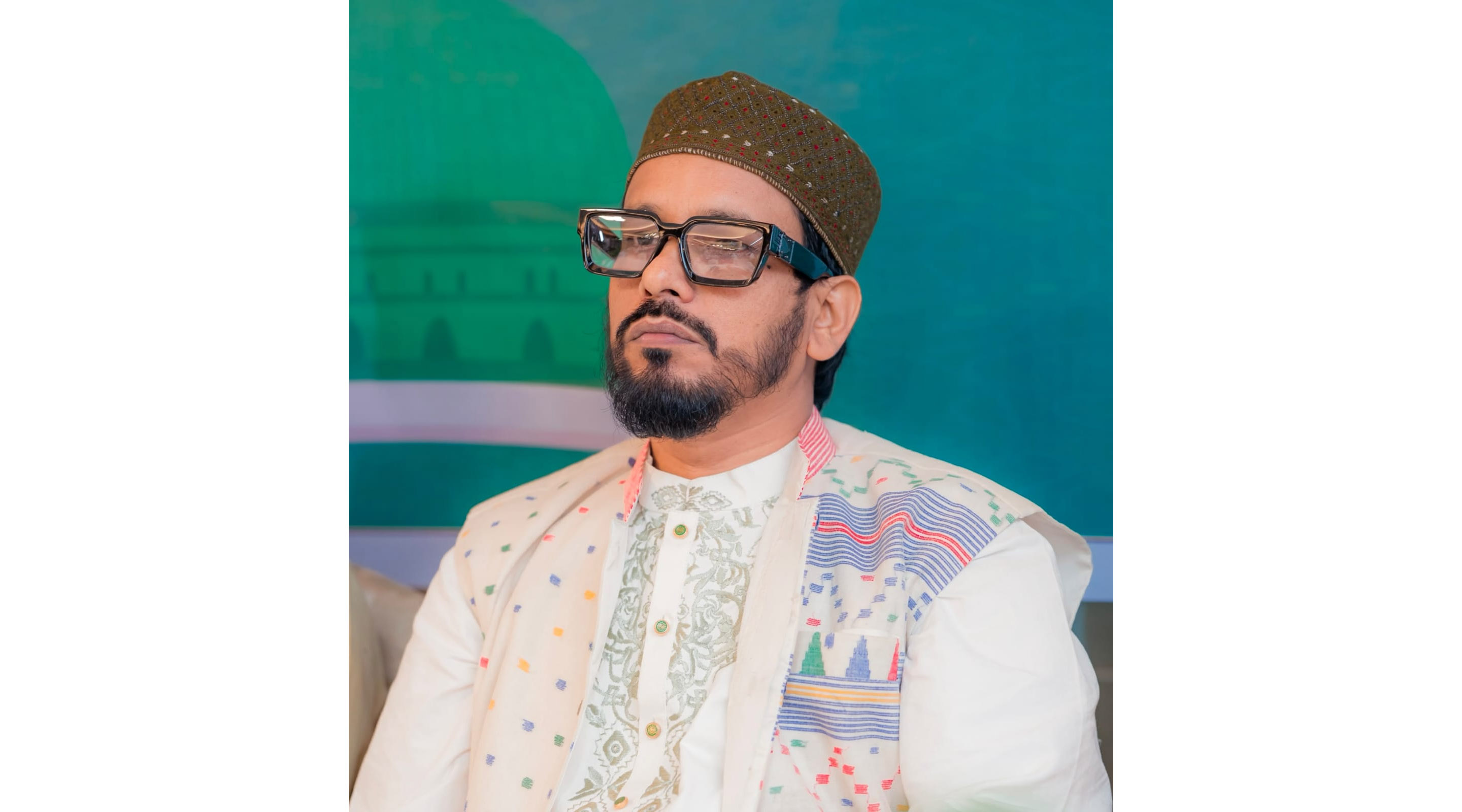
Khaja Osman Faruquee
The writer is Architect of the Sufi
Meditation Method, Founder & Spiritual Guide: Sufi Centre.