

Some 20,000 undocumented and unregistered Bangladeshis
living in Spain are likely to benefit under an extraordinary regularisation
programme announced by the Spanish government in recent times, sources in Dhaka
and Madrid said.
Spain's government has approved plans to give legal status
to 500,000 undocumented and unregistered migrants, allowing them to be
integrated formally into the mainstream workforce.
The total process of regularizing undocumented and
unregistered is likely to be completed by next year, said a Bangladesh diplomat
working in Spain while talking to this correspondent.
Prime Minister Pedro Sánchez described his government's
decision as both "an act of justice" and a necessity for Spain.
In a letter to Spaniards posted on social media, Sánchez, a
socialist, said the mass legalisation sought "to acknowledge the reality
of nearly half a million people who already form part of our everyday
lives".
Some 20,000 Bangladeshis
applied for regularizing with the Spanish authority. Allah almost all will get - except those
unfortunate few who are reported for violation of local rules. However, the process will take time which we cannot
predict, ” said a Bangladesh diplomat in Spain
He also said “The Embassy has successfully finished all
consular services well before May, against an application deadline of June 30
However, Bangladesh missions in Spain do not have proper
and reliable data on Bangladeshis living in the EU
country. The processes of regularization
illegal and undocumented citizens
go through some steps and a
matter of time , said a legal expert
“It is difficult to make a concrete estimation of the number
of legal and illegal Bangladeshi in Spain. We presume some 60,000 Bangladeshi
live in Spain legally. But a quite good number with Spanish passports have
opted to stay in other EU countries settling down there. A good number actually
decided to settle in the UK,” said Bangladesh Ambassador to Spain Masudur
Rahman while talking to this correspondent last week.
“But I don’t think all undocumented, unregistered and
irregular migrants can apply. Over decades some illegals get expulsion orders
many times but they don’t oblige it and Spain can’t enforce deportation
forcibly. Police clearance certificates from Bangladesh are a clear indication
actually how many Bangladeshis are applying” he said.
However, Bangladesh Ambassador to Spain Masudur Rahman while
talking to this correspondent said the Spanish government’s move will help
regularize several thousand Bangladeshi migrants to be regularized in the
coming days. He said that Bangladesh migrants living in Spain without proper
documents should submit necessary and proper documents to the Bangladesh
missions.
He greeted the move of the Spanish government, terming it a
“generous gesture” that would support migrants who have long lived without
proper documentation.
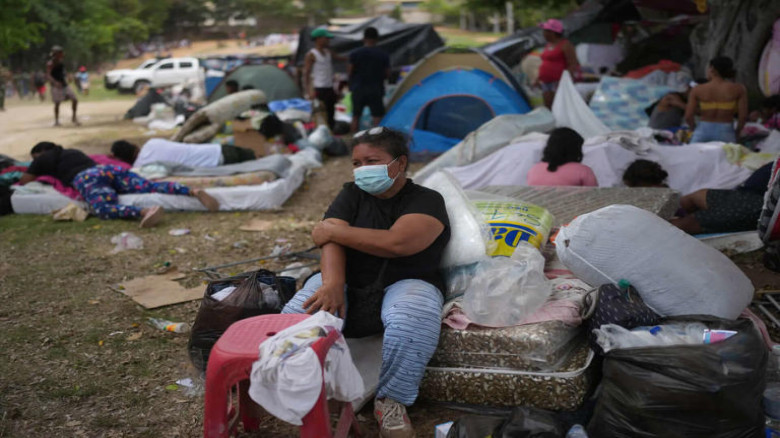
“Currently the irregular (came with visa and remained
illegal) or illegal (entered without valid visa) Bangladeshis are paid by
almost Bangladeshi employers a total of 500 or 600 euro per month and they are
also their accommodation provider. So they were not receiving the minimum
salary as per Spanish or EU law, without any net social security, ” said the
Bangladesh diplomat.
He also said “ Now after becoming legal, employers with
Bangladesh origin cannot spend probably 1221 euro per month and also 500 to 700
euro per month to the social security
The Hispanic migrants are to the tune of 700,000 or more out
of 1.1 million
“For them easier to be integrated into society because of
the same language, culture, food habits, religion and complexion” the diplomat
said.
“Expatriate Bangladeshis living in Spain sent 144.00 million
US dollars home in 2024-25 fiscal year, according to Bangladesh Bank data
......The remittance will cross 250-300 million US dollars provided 20,000
unregistered and irregular Bangladeshis are regularized, said a migration
specialist
Migration is a polarising issue in western Europe, so why is
Spain keen to hurry up the process of regularisation? One reason is that
Spain’s economy has been outstripping its European Union partners. In 2024 the
economy grew by 3.5% but in sectors that struggle to recruit enough workers, so
Spain wants its migrant population to work in a legal way to keep its economic
momentum going., said a migration specialist.
Spain’s regularisation initiative has been widely seen as a
pragmatic response to demographic challenges and labour shortages, reaffirming
the country’s position as an outlier among major European nations in adopting a
more inclusive migration policy.
Former Spanish Ambassador to Bangladesh Francisco de Asís
Benítez Salas while talking to this correspondent praised the Bangladeshi
community in Spain who are contributing positively to the EU economy.
“Bangladeshis in Spain are very entrepreneurial and
hard-working. Through their economic activities, they represent a strong
contribution to the Spanish economy and enrich the diversity of our
communities,” he said.
Sources said that Bangladeshi nationals are living in
Spain, many of them long-term residents with families and businesses. Their
children attend Spanish schools, and the community is considered well
integrated into Spanish society………
Meanwhile, The extraordinary regularization process launched
by the Ministry of Inclusion, Social Security and Migration on April 16 and
ended on June 30, has ended with a total of 1,174,978 registered applications,
of which 609,737 have already been processed.
Of the total number of applications received, 79.6%
correspond to authorizations for exceptional circumstances due to extraordinary
rooting, while the remaining 20.4% refer to authorizations for applicants for
international protection.
The Secretary of State for Migration, Pilar Cancela, has
valued positively the data of this initial phase of the process. “The figures
show the historical effort made by the institutions and civil society, which
have pushed so that no one is left out of this process and achieve an effective
host society, with rights and obligations for all,” he said.
The involvement of professionals and collaborating entities
has been decisive for the high number of applications. According to the data,
58% of the telematic applications were submitted by lawyers, followed by
qualified officials (16.8%), administrative managers (8.4%), the interested
persons themselves by means of a digital certificate (7.3%), entities of the
Registry of Foreigners Collaborators (5.1%) and social graduates (3.6%).
Likewise, the participation of the entities of the Registry
of Collaborators of Foreigners has been one of the main novelties in this
procedure. A total of 495 entities of the Third Sector and trade union
organizations collaborate throughout the process in advisory, accompaniment and
orientation work for the applicants. The Ministry of Migration has maintained a
constant dialogue with them, materialized in about twenty face-to-face meetings
of various representatives held throughout Spain.
Of the total number of applications submitted, 83.2% have
been processed electronically, a figure similar to other immigration processes,
while the remaining 16.8% have been registered in person. In the latter case,
nearly 200,000 applications have been registered in the 448 Post, Social
Security and Immigration offices throughout the country. The selected offices
of Correos will now remain available at the established times for the
face-to-face correction of requests, which will last until September 30.
During the development of the process, the Ministry of
Migration has continuously monitored the care capacity of this network, with
constant monitoring that has made it possible to strengthen and dimension the
resources of each territory according to the levels of demand.
As for the profile of the applicants, 87% are of working age
(between 16 and 64 years), while the distribution by gender places men at 57%
and women at 43% of the total number of applications, although in the case of
minors and in the range of 45 to 54 years the distribution is parity.
By age, the largest group is people between 25 and 34 years
of age, representing 31.3% of the total, followed by those between 35 and 44
years of age (21.6%) and between 16 and 24 years of age (17%). Six out of ten
applicants (59.4%) are under 34 years of age. “The majority of applicants are
going to enter our labor market in strategic and essential sectors,
contributing to the shared prosperity of our country,” said Cancela.
By nationality, Colombia has the highest number of
applications, with 25.9% of the total, followed by Morocco (13.3%), Venezuela
(11.8%), Peru (8.8%) and Honduras (4.9%). Two out of three applicants come from
Central and South America, while 22.9% are of African origin and 8.3% from
Asia.
Catalonia is the autonomous community with the highest
volume of applications (257,602), followed by the Community of Madrid
(202,424), the Valencian Community (167,286) and Andalusia (161,557). Next,
Castilla-La Mancha, Euskadi, Region of Murcia, Castilla y León, Galicia and the
Canary Islands are located, consolidating a significant presence of the process
in all the autonomous communities.
The affiliation of foreign workers to Social Security shows
great dynamism in the first half of 2026 and is configured as one of the main
engines of employment growth in Spain. The rate of increase has been
accelerating since the end of April, when the process of regularizing foreign
persons was launched
This growth has been driven mainly by the strong advance of
people from non-EU countries. According to the latest available data (date to
June 30), 159,097 members of Social Security are registered as a result of the
regularization process.
With regard to the type of employment in which they find
themselves, the regularized persons who have been discharged are mostly covered
by the General Social Security System (83.4%).
In addition, the indefinite contract is the modality that
predominates among the new highs (77.3%), although it is lower than the total
of foreign affiliates from non-EU countries, which is 86.1%.
By type of activity, the sections that concentrate the
highest number of highs are: Hotel Management (38,776), Commerce (20,195),
Administrative Activities (19,327) and Construction (18,310).
Meanwhile, Spain's conservative opposition People's Party
(PP) has pledged to attempt to block the legalisation, which it said rewards
illegal migrants and would encourage more to come.
The government's plan will offer a one-year, renewable
residence permit to undocumented migrants. In order to be eligible, applicants
must prove that they have already spent five months living in Spain and have a
clean criminal record. They have between 16 April and the end of June to apply.
Sánchez said migrants helped "build the rich, open and
diverse Spain that we are and to which we aspire".
Spain Prime Minister Pedro Sánchez said these migrants are
needed to sustain the economy and public services in a country whose population
is ageing. He also said it was the right course of action for a nation which in
the past had seen many of its own nationals emigrate in search of better
opportunities.
The Funcas think-tank estimates that there are around
840,000 undocumented migrants in Spain, the vast majority of whom are Latin
American.
"This is going to benefit a lot of people, give them
access to work and to a better quality of life," said Ricardo, a Bolivian
graphic designer who has been unable to maintain stable employment and plans to
apply for the scheme. "And it means more money for the Spanish state and
more workers will be legally available for employers," according to the
international newspapers.
The opposition has said that the government's estimates are
wrong and that about one million migrants could apply for the scheme, with PP
describing the plan as an "outrage".
The Catholic Church, by contrast, has supported the
government's legislation.
The scheme comes as many of Spain's European neighbours
tighten controls on immigration.
Both Socialist and PP governments have implemented migrant
amnesties in the past. The most recent one was in 2005, when 577,000 people
received residency under a Socialist administration.
writers are senior Journalist.