
UNFPA says that at this pace, it will take more than 200 years to end child marriage in Bangladesh.
Nearly 4 in every 10 girls aged 15 to 19 in Bangladesh are
now married. That is 38.9 percent, up from 32.9 percent. Child marriage as a
whole is falling, but this number is going the wrong way.
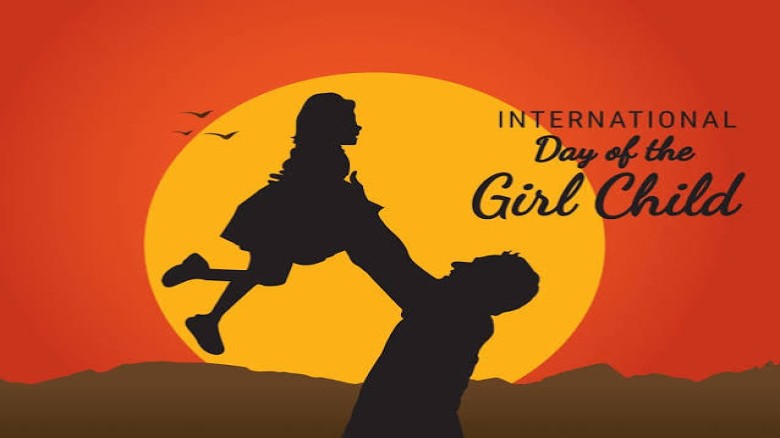
Today is the International Day of the Girl Child. The UN
theme this year is “End child marriage and invest in girls’ rights.” The latest
survey (MICS 2025), run by the Bangladesh Bureau of Statistics and UNICEF,
found that 47.2 percent of women aged 20 to 24 were married before they turned
18. In 2019 it was 51.4 percent. Another 13.4 percent were married before 15.
So the trouble is speed. After the first results came out
last November, the UN Population Fund (UNFPA) said that at this rate, ending
child marriage in Bangladesh would take more than 200 years.
The risk is not the same everywhere. UNICEF’s child marriage
data portal shows that in 2022 the rate was highest in Rajshahi division, at
64.6 percent. Rangpur followed at 58 percent, then Barishal at 57.1 percent and
Khulna at 56.8 percent. Sylhet was the lowest, at 23.3 percent.
Family income makes a big difference too. The same portal’s
2025 figures show that 62.5 percent of women from the poorest households
married before 18. Among the richest households, it was 31.7 percent.
The minimum marriage age in Bangladesh is 18 for girls and
21 for boys. But the 2017 Child Marriage Restraint Act allows exceptions in
special cases. A marriage of a minor is not treated as an offence if it has a
court order and the parents’ consent.
A report by UNICEF, UN Women and Plan International in March
2025 ranked Bangladesh eighth in the world, and first in Asia, for child
marriage. MICS 2025 shows that 22.3 percent of women aged 20 to 24 had a child
before turning 18.
Girls also lag in school and work. The same report says
girls aged 15 to 24 are twice as likely as boys to be out of education, jobs or
training. It also says 28 percent of girls aged 15 to 19 faced physical or
sexual violence from a partner in the past 12 months, and only 47 percent of
married girls that age can make informed decisions about their reproductive
health.
Gaps in school and skills, School thins out step by step.
MICS 2025 shows 6.5 percent of primary-age children are out of school. By
upper-secondary age it is 33.9 percent, girls and boys together. The UNICEF, UN
Women and Plan International report puts the secondary completion rate for
adolescent girls at 59.22 percent.
Digital skills lag too. MICS 2025 found that 37.6 percent of
women aged 15 to 24 have at least one ICT skill.
The global picture is mixed too. UNICEF estimates about 650
million women alive today were married as children, and around 12 million more
girls marry before 18 every year. About 68 million child marriages were stopped
over the past 25 years. UNICEF’s 2023 report says about 45 percent of the
world’s child brides live in South Asia. The UN General Assembly adopted the
day on 19 December 2011 (Resolution 66/170), on a proposal from Canada. It was
first marked in 2012.
Last year, around the Day of the Girl Child, the government
held an inter-ministry dialogue led by the Ministry of Women and Children
Affairs, with UNFPA’s support. Officials from the ministries of education, law
and justice, and information and broadcasting took part. The law ministry was
asked to digitise marriage registration to stop age falsification, and to amend
the Child Marriage Restraint Act to close legal loopholes.
The latest survey shows that although the overall rate has
fallen, nearly 4 in 10 girls aged 15 to 19 are now married. Decisions have been
taken. What remains to be seen is how far they reach the ground.
Dr Rahena Begum says,
a girl’s development is not just about her body growing up. It is tied
to her confidence, her dignity and her mental health. What happens in childhood
shapes who she becomes and how her life turns out. Discrimination, neglect and
child marriage shrink that potential. So girls need a safe home, good
education, the freedom to speak, and an equal chance to chase their dreams.
Give girls rights, not pity. Give them room to grow, not control. The confident
girl of today will build a society of equal rights tomorrow, says Rahena Begum,
A life Fellowship of ATCB.
Associate Professor of University of Rajshahi Dr. Md. Saleh
Mahmud, said, when we speak of equal rights for men and women, we generally
think in terms of adults. However, we often fail to give adequate consideration
to the safety of children, particularly girl children. In recent times, girls
have increasingly become victims of various forms of physical and mental abuse.
Therefore, ensuring the education, dignity, and safety of a girl child is
tantamount to building a bright future. Consequently, the issue of the safety
of girl children warrants special emphasis in discussions regarding equal
rights and security for men and women.
Convener of Ogrojatra Nari Forum Zakia Shisir says, despite minor
positive shifts in societal attitudes, girl children—particularly in rural
areas—continue to face deep-rooted discrimination, often being viewed as
financial burdens while boys are prioritized as future providers. This mindset
subjects girls to unrecognized domestic labor from childhood, limiting their
independence, creativity, and freedom of movement as they grow older.
Furthermore, systemic gender disparities persist in household nutrition alongside
severe health risks driven by social taboos surrounding menstrual and
reproductive health. These issues are exacerbated by critical barriers such as
child marriage, street harassment that disrupts education, and a total lack of
personal agency in making life choices. Overcoming these challenges requires a
comprehensive societal transformation that begins with ensuring equal food,
education, and voice within the family, promoting higher education to dispel
dependency myths, and establishing safe public environments alongside
vocational training to foster true economic independence.