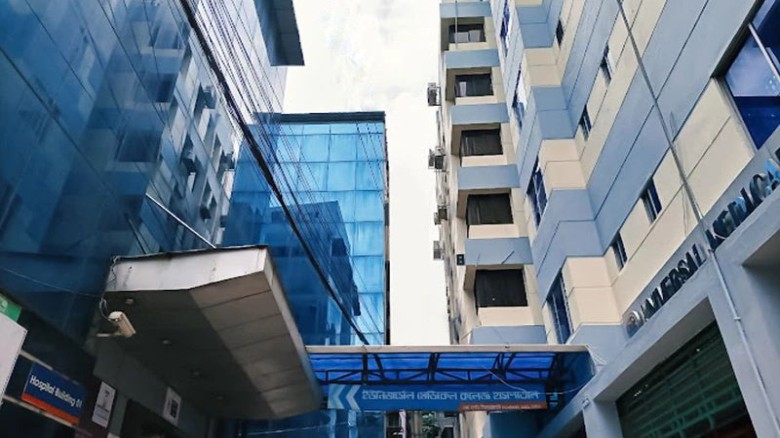

The capital’s Universal Medical College and Hospital has long been making a significant contribution to the country’s health sector by providing advanced healthcare to complex and terminally ill patients in Dhaka and across the country, as well as by establishing various social and charity programs, as well as creating a skilled workforce through the establishment of medical colleges and nursing colleges.
We are deeply concerned that completely one-sided, fragmented and baseless propaganda and rumors are being spread recently on various media, including social media, regarding the death of Wise Kuruni Avan, a child suffering from Dengue Shock Syndrome. The premature death of any child is a very painful and irreparable loss; the Universal Medical College Hospital family is deeply saddened by this. But this sad incident is being capitalized on to incite public anger by personally attacking doctors, criticizing the institution, and spreading false, misleading and unscientific information against the medical system.
Not only that, but public announcements are being made through Facebook to create a mob in the hospital.
Such bragging and targeted propaganda has created extreme insecurity and risk of violence against doctors and health workers, which is putting the country’s overall medical services at serious risk. In this context, this memorandum is presented by highlighting the real clinical truth.
The authenticity of the patient’s clinical description and the steps taken:
Patient’s arrival at the hospital and first aid (28 September 2026) On the night of September 28, 2026, 4-year-old child Wise Kuruni Avan came to the hospital’s outpatient department (OPD) with fever, nosebleeds and suspected hemorrhagic dengue fever. At that time, the senior duty specialist (junior consultant) on duty in the PICU, Dr. Nazrul Islam MBBS, DCH, saw the child (it should be noted that specialist pediatricians provide medical care 24 hours (365 days) in this hospital). Dr. Nazrul Islam gave the patient some investigations and advised the child to be admitted under the supervision of Professor Dr. Mahfuza Shirin, Head of the Neonatal Pediatric Department of Dhaka Children’s Hospital. The investigations sent after admission confirmed the presence of bacterial infection in the child’s body. Therefore, antibiotics were started.
Diagnosis and treatment according to dengue extended syndrome Several investigations are done daily while the child is in the ward. Even though the dengue test comes out negative, the reports of other parameters like CRP, Ferritin, Procalcitonin, SGPT and SGOT are clinically consistent with Dengue Extended Syndrome. We get such reports very naturally during this season of dengue epidemic. The treatment plan continues accordingly.
Family reluctance and delay in PICU transfer, 01 October 2026: The patient’s vitals gradually started to deteriorate since the evening of 1 October. When Professor Dr. Mahfuza Shirin came to see the patient, the patient’s mother said that the child was becoming weak (lethargic). Professor Shirin immediately checked the vitals and decided to transfer the child to the PICU for close monitoring. But the patient’s mother expressed her reluctance to go to the PICU and said, ‘I will give you whatever treatment you need here.’
02 October 2026: The next day, from the morning of 2 October, the child’s physical condition (vitals) continued to worsen; especially since the pressure had decreased, Plasmasol fluid was started in the ward to increase the pressure. At 1:30 pm, Professor Dr. Mahfuza Shirin saw the patient again; Plasmasol and DNS infusion were already underway. Despite this treatment, the patient’s condition deteriorated, so he asked for urgent shift to PICU again. But even then, the patient’s relatives delayed shifting to PICU. Later, the patient was transferred to PICU at 4:00 pm as the relatives agreed.
Intensive monitoring and life-saving treatment in PICU, After transfer to PICU at 4:00 PM on October 2, Hartsol, Plasmasol infusion, Inj. Dobutamine and Inj. Nor-Adrenaline were added to increase the pressure. Other treatments continued simultaneously. But the patient’s condition remained unchanged and became more critical.
The patient’s condition began to deteriorate rapidly from the morning of October 3. The patient’s mother was spoken to from the beginning and informed about the child’s deterioration and the possibility of needing life support at any time. Each time, the child’s mother signed the notification . At this time, since the Troponin-I and Pro-BNP reports were high in favor of myocarditis, Inj. IVIG (IV IG) and Inj. Methylprednisolone were given.
Application of life support and unexpected death (3 October 2026), At 3:30 pm on October 3, the child’s respiratory condition deteriorated, so he was put on life support (ventilator) and a CV line was also inserted. But despite all life-saving drugs, the patient went into cardiac arrest and attempts were made to restore the heartbeat with CPR. Despite all efforts, Avan could not be saved. The child died at 5:02 pm. Later, copies of all printed investigations and death certificates of Avan, along with the body, were provided to the patient’s relatives.
Intensive care capacity of Universal Medical College Hospital, Universal Medical College Hospital has been successfully treating numerous children in NICU and PICU for a long time . These PICU and NICU are being run under the supervision of two renowned professors— one of whom is the Head of the Department of Pediatrics of Bangladesh Children’s Hospital, Professor Dr. M. Monir Hossain FCPS (PAED), MD (DU), DCH (IPGMR), FRCPCH (LONDON), FRCP (GlW), FRCP (EDIN), FRCP (UK), PGD (DU) and the Head of the Department of Neonatal Pediatrics of the same institution, Professor Dr. Mahfuza Shirin, MBBS, FCPS (PAED). They are also accompanied by 24-hour specialist doctors with MD and FCPS degrees in pediatrics. In addition, there are 24-hour skilled nurses, skilled medical officers and pediatric registrars.
Universal Medical College Hospital never wants a child to die and treatment is provided here consistently following international and national guidelines.
Summary Clinical Timeline,Date and time Physical conditions and symptoms Treatment and steps taken Relatives’ position/comments
28 September 2026, night Fever, nosebleeds, suspected hemorrhagic dengue Examination, investigation in OPD, antibiotics started as bacterial infection confirmed; admitted to pediatric ward as vitals are good Admission to the ward as per the admission advice
29-30 September 2026 CRP, Ferritin, Procalcitonin, SGPT, SGOT reports are consistent with Dengue Extended Syndrome; Dengue test negative Daily investigation; treatment plan accordingly Under treatment in the ward01 October 2026 Vitals gradually deteriorate; child is lethargic. Decision to transfer to PICU by Professor Mahfuza Shirin; later sent for further tests and treated in the ward Mother expresses reluctance to go to PICU
02 October 2026, morning Vitals worse, blood pressure dropping Plasmasol fluid started in the ward Mother expresses reluctance to go to PICU
02 October 2026, 1:30 PM Conditions worsen despite Plasmasol and DNS Professor Shirin re-examines; orders immediate shift to PICU Relatives delay shift; later agree. Inform and obtain signatures regarding patient’s critical condition
02 October 2026, 4:00 PM The situation remains unchanged and more alarming. Shift to PICU; Hartsol, Plasmasol, Dobutamine, Nor-Adrenaline added Discussion with mother; informing about the possibility of life support and obtaining signature
03 October 2026, morning Rapid deterioration; Troponin-I and Pro-BNP are high (in favor of myocarditis) Inj. IVIG and Inj. Methylprednisolone given Informing about the possibility of life support and obtaining signatures
03 October 2026, 3:30 PM - 5:02 PM Respiratory distress, cardiac arrest Life support (ventilator), CV line and CPR The child died at 5:02 pm; report and death certificate handed over, Concerns about the crisis and violence in the overall health sector:
Media trials and public outrage: Attempts are being made to identify doctors as criminals by spreading fragmented information on social media without considering the complexity of the patient’s treatment and clinical reality. And the general public is being openly incited through Facebook for mobs.
Physician and Risk of violence against health workers: As a result of such madness and exaggeration, doctors, nurses and health workers working in the country’s hospitals are suffering from extreme insecurity. Incidents of unwanted attacks, vandalism and mental harassment are increasing alarmingly in various places. If this is not stopped urgently, the country ‘s health system will collapse.
Disruption of treatment of critical patients: Due to the pressure of baseless propaganda, legal and social fear is being created among doctors (the practice of defensive medicine is increasing ). As a result, doctors will hesitate to make urgent decisions for dying and critical patients, which will ultimately cost the general public and the health sector.