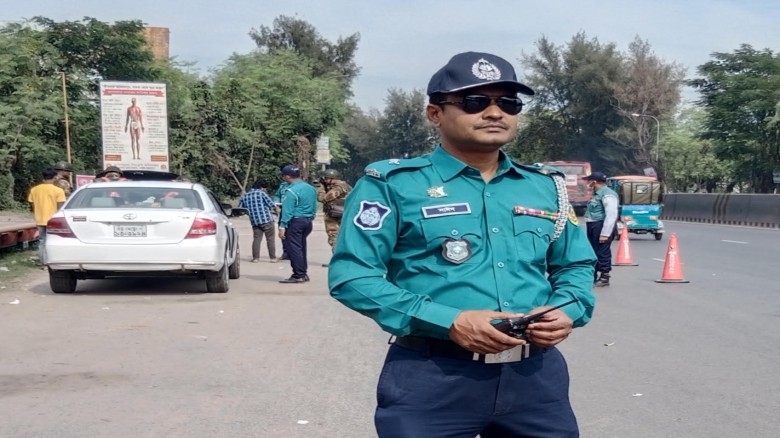

From morning until late at night, traffic police officers stand at the city’s busy intersections, managing the flow of vehicles. They endure overhead sun, surrounding dust, and the deafening noise of vehicle horns. Amidst this, exhaust fumes from buses, trucks, motorcycles, and other vehicles mingle with the air they breathe; they are constantly exposed to emissions from old and diesel-powered vehicles for hours on end.
While city dwellers traverse these polluted roads to reach their destinations, traffic police officers must perform their duties in this environment for extended periods. Air and noise pollution, extreme heat, rain, and the strain of standing for long hours combine to create various health risks in their work environment.
Long Hours of Duty Amidst Polluted Air Conversations with traffic police officers stationed at key intersections in Chattogram city reveal that their prolonged presence on the roads leads to physical discomfort and various health issues. Beyond dust and vehicle exhaust, excessive noise is a constant companion in their daily lives.
One female traffic officer noted that they must stand on duty for long periods. Factors such as dust, black vehicle smoke, air pollution, and excessive noise give rise to various physical ailments. Even when medical attention is needed, the demands of the job often make it difficult to access regular healthcare.
Another grievance raised by the female officer is the lack of separate restrooms or adequate sanitation facilities for women in many traffic police booths, creating additional difficulties for them at the workplace.
Zakir Hossain has been in the profession for 21 years, serving with the Chattogram Metropolitan Police (CMP) for approximately 13 of those years. “We have to perform our duties despite various adversities,” Zakir said. “As a result, many experience a decline in physical capability at an early age. Standing for long periods causes pain in the legs, knees, and lower back.” “Prolonged exposure to high noise levels can also lead to hearing impairment.”
He also believes there is a need to make traffic police booths more eco-friendly and user-friendly.
How dangerous are invisible smoke particles? Fine particulate matter—specifically PM2.5 and PM10—is a major air pollution concern for traffic police. These particles are so minute that they can penetrate deep into the lungs during inhalation. Long-term exposure can affect not only the respiratory system but also the cardiovascular system and cerebral blood vessels.
According to the World Health Organization (WHO), air pollution from the transport sector stems not only from vehicle exhaust but also from road dust and particles generated by the wear and tear of brakes and tires. Exposure to these pollutants has been linked to heart disease, stroke, asthma, and other health risks.
In other words, road pollution is not limited to the visible black smoke; ultra-fine particles, invisible to the naked eye, can also enter the body through inhalation.
Research raises concerns Studies conducted in various countries regarding the health of traffic police have highlighted concerns about long-term exposure to air pollution. Some studies have indicated a potential link between traffic police officers’ exposure to air pollution and various respiratory, cardiovascular, and ocular issues.
A study involving 574 police officers in Bogotá, Colombia, found that traffic police officers had higher personal exposure to PM10 compared to officers working in administrative roles. The study also noted a higher prevalence of symptoms such as coughing, phlegm production, nasal and sinus problems, and nasal irritation among traffic police.
Research from countries including Thailand, India, and Malaysia has similarly raised concerns regarding traffic police officers’ occupational exposure to air pollution and its impact on respiratory health. A study has identified a link between traffic police officers’ exposure to PM2.5 and certain indicators of lung function.
However, it is incorrect to directly interpret the findings of these studies as definitive proof that “air pollution caused the illness.” These studies primarily suggest a potential association; long-term, comprehensive research is required to establish a definitive cause-and-effect relationship regarding specific diseases.
Impact of Prolonged Standing Beyond air and noise pollution, standing for extended periods can also place physical strain on traffic police officers.
Dr. Aminuddin A. Khan, Professor of Physical Medicine and Rehabilitation at Chattogram Medical College Hospital, notes that prolonged standing can lead to leg muscle pain and fatigue. Specific issues include pain in the calves and thighs, discomfort in the feet or heels, a burning sensation in the soles of the feet, and muscle cramps.
He explains that standing for long periods and placing excessive pressure on the knees can cause knee pain. In addition to leg swelling, there is a risk of blood pooling in the lower body. Performing duties under these conditions over a long period can also lead to varicose veins in some individuals.
Commuting Stress Associated with Duty Barracks for Chattogram Metropolitan Police traffic personnel are located at the Dampara Police Lines. However, many officers must commute long distances to perform their duties in various parts of the city.
A significant amount of time is consumed just by commuting to distant duty locations such as Moijjartek, Notun Bridge, and the airport. Consequently, officers spend extra time traveling beyond their eight-hour shifts, which can reduce opportunities for adequate rest.
Furthermore, there is a lack of adequate police boxes or canopies for traffic personnel in all areas. Even where boxes exist, there are complaints regarding the absence of essential facilities, such as restrooms. This issue is particularly acute for female officers.
Health Special Measures Needed for Protection While performing their duties on the roads, traffic police personnel face a multitude of challenges simultaneously, including air and noise pollution, exposure to sun and rain, excessive heat, and the strain of standing for long periods. Given these conditions, stakeholders emphasize the importance of regular health check-ups, adequate rest, access to safe drinking water, improved traffic booths, separate sanitation facilities for female officers, and the provision of necessary protective equipment.
Abu Sayeed Baker, TI (Admin) of the CMP Traffic Port Division, stated, “Traffic police personnel not only have to perform their duties amidst air and noise pollution and harsh weather conditions like sun and rain, but they also lack adequate facilities. Ensuring their health and safety is the responsibility of the state.”
As urbanization and traffic volume on Chattogram’s roads increase, so too do the responsibilities of the traffic police. Consequently, the working environment and health safety of those who stand on city streets daily to maintain the flow of traffic are becoming increasingly important. Regular health check-ups, sufficient rest, a safe working environment, and necessary protective measures can play a vital role in mitigating their long-term health risks.