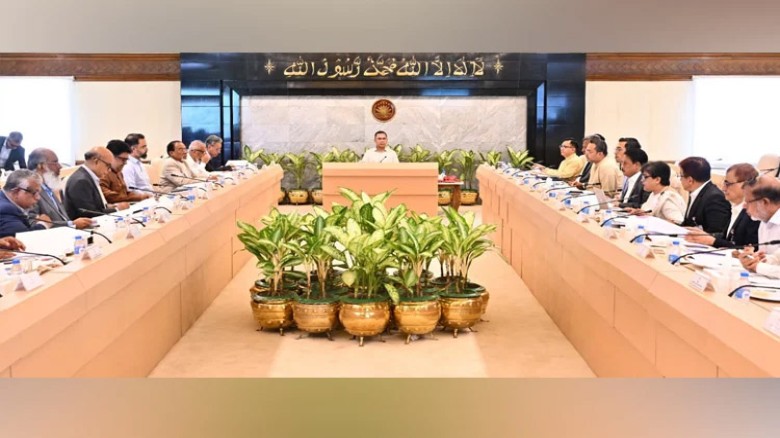

DHAKA : An orientation workshop on the developed training
manuals to strengthen the capacity of local government institutions and
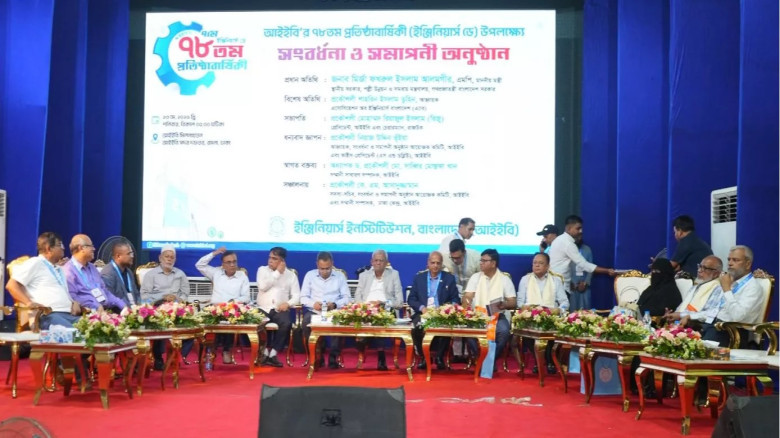
government officials was held today in the third-floor seminar room of the
National Institute of Local Government (NILG) in the capital’s Agargaon.
With the support of the Embassy of Switzerland in
Bangladesh, the workshop was organised by NILG under the GO4IMPact programme of
the WaterAid Bangladesh–Swisscontact Bangladesh consortium.
Md. Aminul Islam, Director General (Secretary), NILG,
attended as chief guest, and Azman Ahmed Chowdhury, Country Director, WaterAid
Bangladesh, attended as special guest. The workshop was chaired by Md.
Kayesuzzaman, Director, Training and Consultancy (Joint Secretary), NILG, who
presented the manuals together with Monika Mitra, Assistant Director, NILG.
“We must develop ways to connect the realities on the
ground with scientifically sound practices, so that we can ensure the right and
positive impact on the environment,” said chief guest Md. Aminul Islam,
Director General (Secretary), NILG.
“I sincerely thank everyone involved in making today’s
event a success. WaterAid Bangladesh will continue working with NILG to build
the institutional capacity needed to ensure climate-resilient water and waste
management at the grassroots level,” said special guest Azman Ahmed Chowdhury,
Country Director, WaterAid Bangladesh, a press release said.
“NILG plans to include these manuals in its regular
training programmes, so that local government representatives and officials can
carry out their responsibilities for climate-resilient water and waste
management more effectively,” said Md. Kayesuzzaman, Director, Training and
Consultancy (Joint Secretary), NILG.
Participants included officials from the Local Government
Division; the Ministry of Environment, Forest and Climate Change; the Ministry
of Water Resources; the Ministry of Women and Children Affairs; the Water
Resources Planning Organization; the Department of Environment; the Bangladesh
Academy for Rural Development (BARD); the Rural Development Academy, Bogura;
and the Bangladesh Public Administration Training Centre. The Deputy Directors
of Local Government of Naogaon and Satkhira, Union Parishad and Paurashava
representatives, development partners JICA and KOICA, and representatives of
several NGOs also attended.
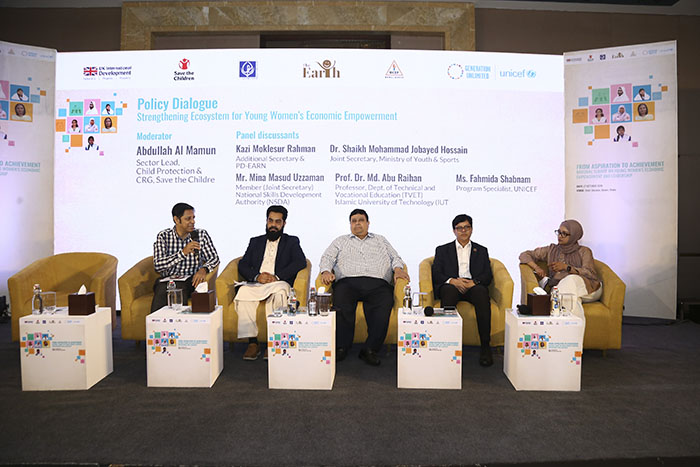
Panel discussants shared their views on the new training
manuals, and participants spontaneously joined the open discussion with field
experiences and suggestions. Speakers expressed hope that the manuals will play
an important role in improving the effectiveness of local government
institutions and strengthening climate-resilient water resource and solid waste
management.
Based on these manuals, NILG has already completed
residential training for 551 local government representatives and related
government officials from Naogaon and Satkhira districts in 15 batches between
May and September this year.