
Monokotha, an initiative of the Dream Research and
Development Foundation (DRDF), has launched the ‘Monokotha Care Card’ to make
mental healthcare more accessible, affordable and available to people in need.
The initiative aims to promote regular mental healthcare and provide access to
support for people dealing with stress, anxiety, loneliness and various
emotional difficulties.
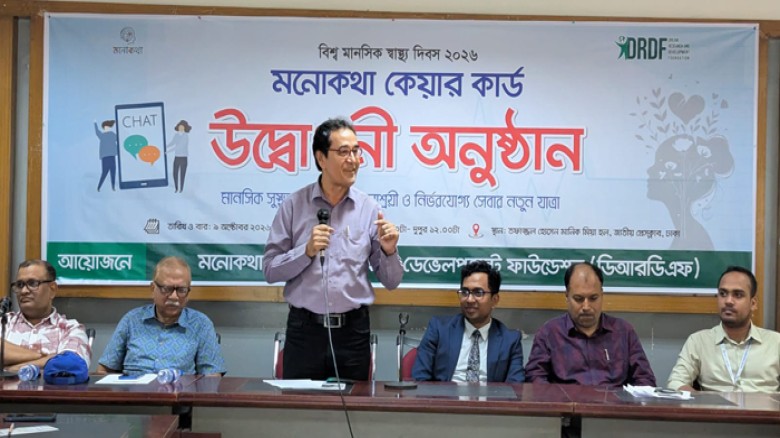
The card was formally launched on Friday at a programme
organised at the National Press Club in Dhaka to mark World Mental Health Day
2026. Professor Dr Md Shamsuddin Elias, president of the Bangladesh
Psychological Association (BPA), inaugurated the initiative.
The programme was chaired by Mir Mohammad Ali, president
of DRDF and a teacher at Sher-e-Bangla Agricultural University. Nikhil Chandra
Bhadra, coordinator of the Sundarbans and Coastal Protection Movement,
moderated the event.
Environmental and human rights activist Aminur Rasul
Babul, clinical psychologist and HRDC director Jianur Kabir, psychosocial
counsellor Md Samsuzzaman Molla (Emon), and psychologist Tarin Tabassum, among
others, took part in the discussion.
Psychologist and researcher Tanzim Zaman outlined
Monokotha’s activities, objectives and future plans. He said raising awareness
about mental health and ensuring that people can access the support they need
were among the most important challenges of the present time.
Psychologist and mentor Hridoy Iftekhar Ifti introduced
the Monokotha Care Card, explaining its purpose, the benefits it offers and its
potential role in ensuring regular mental healthcare.
Speaking at the programme, Professor Elias said mental
health was an integral part of overall wellbeing and not merely a personal
matter, but an important public health issue.
Many people experience stress, anxiety, loneliness and
emotional difficulties in their daily lives, but social stigma, a lack of
awareness and insufficient information about available services often
discourage them from seeking help, he said.
He stressed the need for effective initiatives that give
mental health due importance in efforts to improve individuals, families and
society.
In his concluding remarks, Mir Mohammad Ali said mental
health required regular care just as physical health did.
He said many mental health challenges could be addressed
more effectively if problems were identified early and appropriate support was
provided before a crisis intensified.