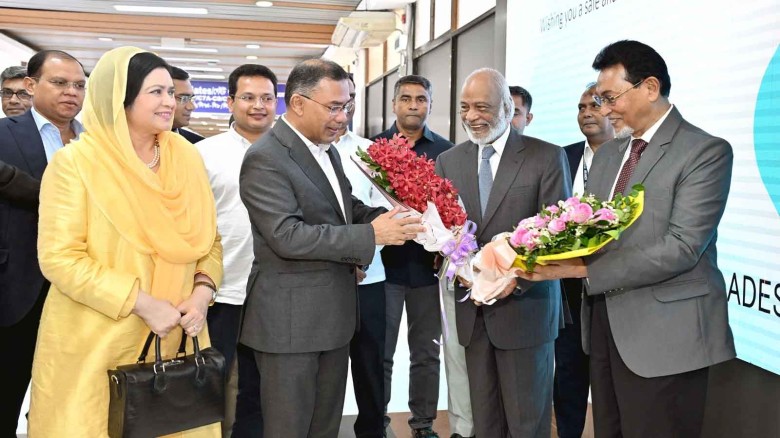
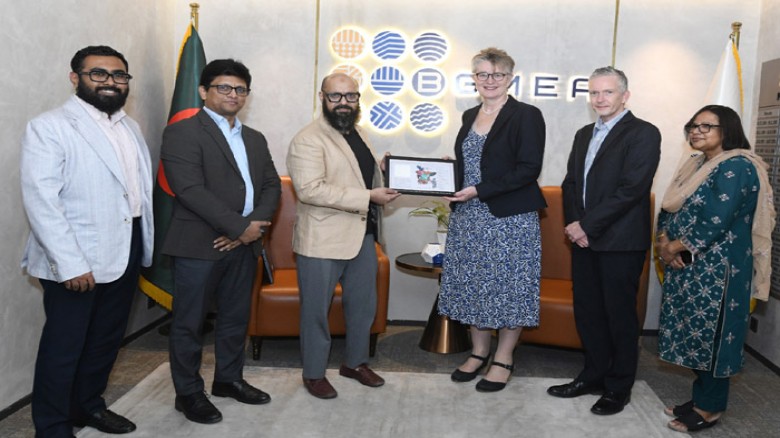

A high-level bilateral meeting was held Wednesday, October
7, 2026, at the BGMEA Complex in Uttara, aimed at accelerating environmental
protection, water resource management, and the sustainable transformation of
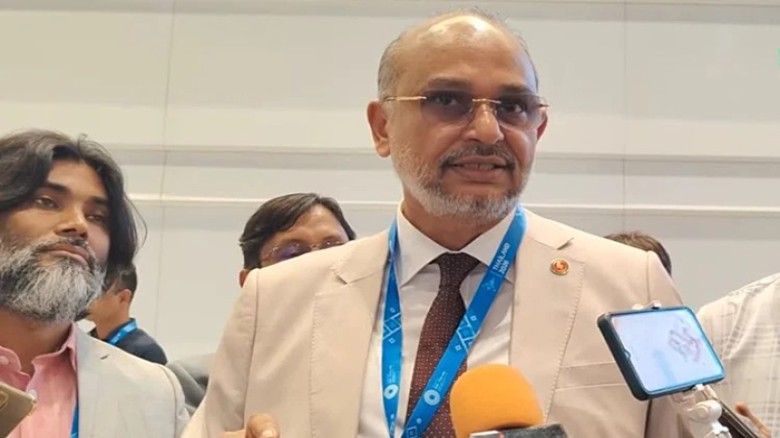
Bangladesh's ready-made garment sector. During the meeting, a World Bank
delegation led by Mara K. Warwick, Regional Director for Sustainable
Development in South Asia, engaged in significant discussions with BGMEA
President Mahmud Hasan Khan. BGMEA Director Dr. Md. Hasib Uddin also
participated in the discussion on behalf of the association. a press release
said.
Other members of the World Bank delegation included Lead
Water Specialist David Melcom Lord, Senior Water Supply and Sanitation
Specialist Rokeya Ahmed, Water Specialist Md. Mahadi Hasan, and Environmental
Specialist Bushra Nishat.
At the outset of the meeting, the BGMEA President stated
that water management is no longer merely an environmental issue; it is
directly linked to international trade and global competitiveness. Currently,
international buyers—particularly European brands—prioritize data regarding
water usage reduction, wastewater treatment, and water recycling at every stage
of garment production as a key requirement. Therefore, adopting modern,
water-efficient technology is essential to safeguard Dhaka’s rivers and groundwater
levels while simultaneously sustaining export markets.
The meeting included a detailed review of the 'Dhaka Water
Security and Resilience Program' (D-Water)—currently being implemented with
World Bank support—and the associated $5 million Viability Gap Funding (VGF)
pilot project. Under this project, the BGMEA proposed an initial list of 31
factories, from which the World Bank selected eight to begin operations.
However, the $5 million fund and the number of selected factories are vastly
insufficient compared to the immense interest and demand for sustainable technology
among local garment factories. Given this reality, the BGMEA President strongly
urged the World Bank to significantly expand the project's funding and overall
scope.
Highlighting the key challenges regarding water management
in the ready-made garment (RMG) sector, BGMEA leaders pointed out that high
investment costs act as a major barrier to sustainable water management, making
it extremely difficult for entrepreneurs to ensure the financial viability of
such projects. Securing fair prices for products in the international market
amidst the current global economic downturn poses another significant
challenge. Only if international development partners like the World Bank
provide large-scale financial support—through grants or long-term,
zero-interest loans with favorable terms—will it be possible for entrepreneurs
to successfully pursue this transformative initiative.
The meeting also shed light on infrastructural realities:
while many factories have the space to install their own Effluent Treatment
Plants (ETPs), they lack access to nearby suitable water bodies or drainage
systems; conversely, many small and medium-sized factories lack the financial
capacity to set up large, individual plants. To address this crisis, emphasis
was placed on removing industrial waste via lorries or tankers—rather than
installing permanent pipelines—and adopting cluster-based treatment systems.
Furthermore, a call was made to rapidly expand these activities to other
industrial zones across the country, rather than limiting them solely to Dhaka.
Additionally, the need to ensure a stable environment for
sustainable industrial investment was strongly emphasized; it was urged that
environmental policies or government regulations should not be altered
abruptly, and that sufficient time and advance notice should be provided before
their implementation. BGMEA leaders noted that if regulatory predictability is
maintained, factories would be further encouraged to make long-term,
eco-friendly investments.
At the conclusion of the meeting, the World Bank delegation
received the BGMEA leaders' proposals very positively and gave strong
assurances of continued support—including in logistics—to accelerate the green
transformation of Bangladesh's ready-made garment sector.