
For Bangladesh, the Halal economy is no longer simply a question of whether a product is permissible for Muslim consumers. It is increasingly a question of industry, investment, certification, technology, standards, skills, market access and exports, a press release said.
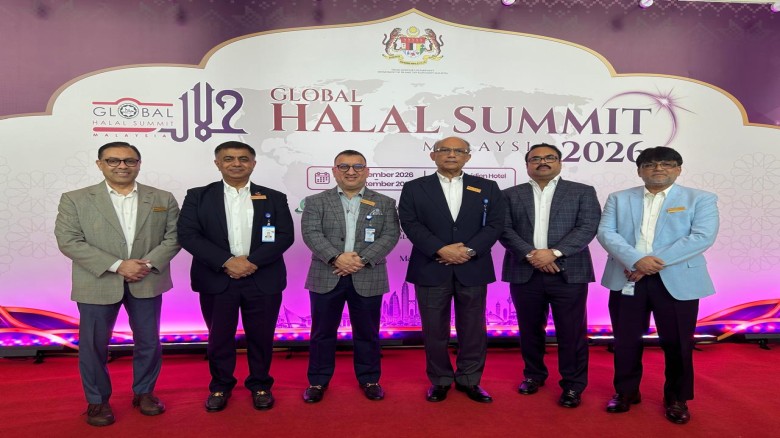
This broader understanding was at the heart of the Bangladesh–Malaysia Chamber of Commerce and Industry’s (BMCCI) recent engagement in Malaysia, where a business delegation led by BMCCI President Md. Anwar Shahid participated in the Malaysia International Halal Showcase (MIHAS) 2026 and held strategic meetings with key Malaysian Halal institutions, including the Department of Islamic Development Malaysia (JAKIM) and the Halal Development Corporation (HDC).
The delegation’s objective is to connect Bangladeshi businesses with the global Halal ecosystem and explore how Malaysia’s world-class Halal experience can support the development of Bangladesh’s Halal industry and export capacity.
MIHAS 2026, the 22nd edition of the Malaysia International Halal Showcase, was held from 23–26 September 2026 at the Malaysia International Trade and Exhibition Centre (MITEC), Kuala Lumpur. The showcase brings together the wider Halal economy across 14 industry clusters, extending well beyond food to include pharmaceuticals and medicals, cosmetics and personal care, modest fashion and lifestyle, Islamic finance and fintech, e-commerce, education, tourism, services and other sectors.
For BMCCI, the MIHAS visit was not simply an exhibition visit. It was an effort to understand the complete Halal value chain, identify international market opportunities, introduce Bangladeshi businesses to global Halal companies and institutions, and develop practical cooperation for Bangladesh’s export diversification.
Meetings with Malaysian Halal Certification Authority and Halal Development Corporation
During the Malaysia visit, the BMCCI delegation held a meeting with Dato’ Mohd Asri Bin Abdullah, Director of the Halal Management Division of the Department of Islamic Development Malaysia (JAKIM), along with senior JAKIM officials.
The discussion focused on internationally trusted Halal certification, compliance pathways, capacity building and the possibility of developing a stronger JAKIM-supported certification mechanism in Bangladesh. BMCCI also discussed the importance of helping Bangladeshi companies meet Malaysian
and international Halal requirements so that certification becomes a pathway to global market access rather than simply a requirement for entering one market.
BMCCI also invited JAKIM to become an institutional partner in the proposed Bangladesh Halal Investment Summit in 2027 and discussed the establishment of a dedicated JAKIM–BMCCI Working Group for technical consultations, capacity building and institutional development. JAKIM expressed willingness to support Bangladesh through institutional cooperation, technical guidance and human-capital development.
The delegation also held discussions with the Halal Development Corporation (HDC) on developing a long-term Bangladesh–Malaysia Halal partnership. The discussions explored bringing Malaysian Halal companies to Bangladesh, investment and joint-venture opportunities, technology and knowledge transfer, participation of Malaysian companies in Bangladesh trade fairs, and the proposed Bangladesh Halal Investment Summit. BMCCI and HDC also discussed the need to move beyond individual events and establish a year-round cooperation mechanism, including designated focal persons, regular communication, business matching, market intelligence and follow-up activities.
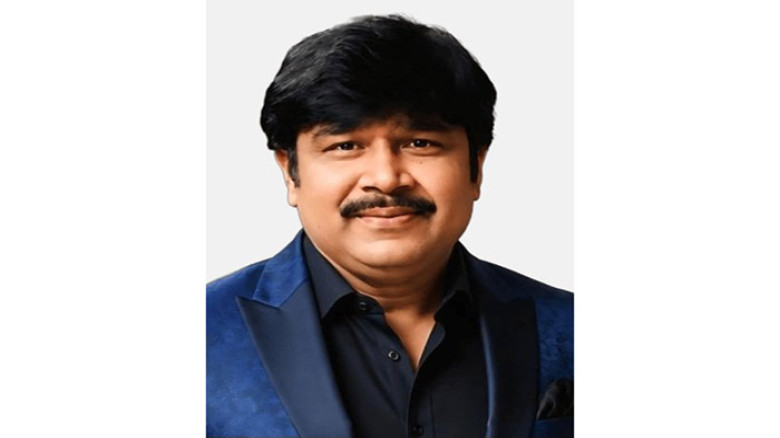
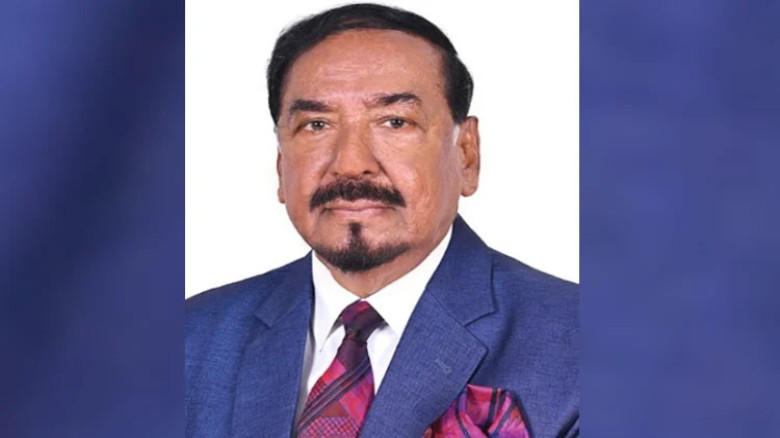
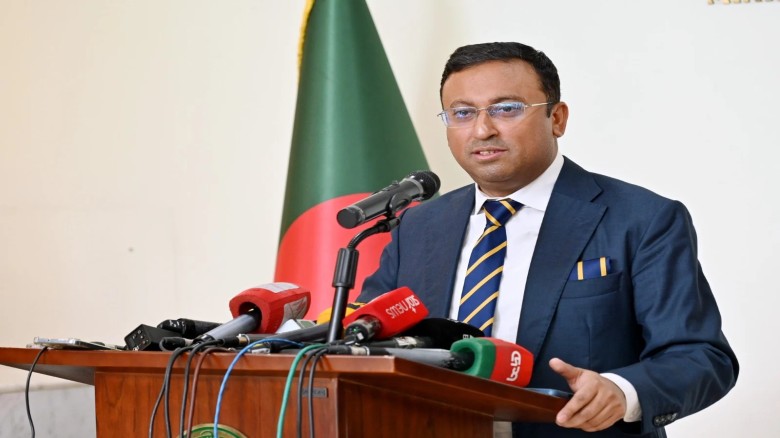
Md. Anwar Shahid, President of BMCCI, said: “Bangladesh should not look at Halal merely as a certification issue. We should look at it as an industrial, investment and export opportunity. Our objective is to make Bangladeshi businesses genuinely export-ready so that they can compete in Malaysia and other international Halal markets. Malaysia has built a strong ecosystem around standards, certification, industry development and
global market access, and BMCCI wants to help create meaningful bridges between that ecosystem and Bangladesh.
The halal ecosystem is very important here in Malaysia. Through the Malaysia Chamber, we are emphasizing the halal ecosystem. Beyond food products, the importance of halal certification is growing across all sectors, including cosmetics, medicines, and pharmaceuticals. Once a product successfully receives a proper halal certificate, it opens up opportunities for export not just to the Malaysian market, but to other countries as well. Therefore, we do not view halal merely as a religious matter, but as part of a commercial and global market.
The biggest problem is an acceptable and internationally recognized certification system. We may consider many products to be halal, but in the international market, simply claiming so is not enough; certification from a recognized body is required.
The main objective is to popularize the concept of halal. In Bangladesh, we generally associate halal only with food. However, there are also halal logistics, halal hotels, halal tourism, and more. As a result, the scope is vast.”
Syed Moinuddin Ahmed, Secretary General of BMCCI, said: “The next step for Bangladesh is to move from discussion to implementation. We need a coordinated approach involving government agencies, certification bodies, laboratories, universities, businesses and industry associations. BMCCI is ready to facilitate that coordination and help create a practical pathway from awareness and training to certification, market access and exports. MIHAS has shown us that the Halal economy is much broader than food. Bangladesh must identify its strengths sector by sector and prepare companies accordingly. If we can build the right ecosystem, Halal can become an important pillar of Bangladesh’s export diversification.
Halal does not just mean that a product lacks pork ingredients it goes beyond that. There must be traceability regarding how poultry or beef was slaughtered and what ingredients were used throughout the entire production process. This applies to cosmetics, medicines, and pharmaceuticals as well.
We have had discussions with the Department of Islamic Development Malaysia (JAKIM). There are gaps in laboratory and technical capabilities. The issue of technological and training assistance from the Malaysian side has come up in discussions. Once implemented, this can resolve many problems in Bangladesh’s halal certification system.”
BMCCI is also exploring the development of a Bangladesh Halal Investment Summit as a platform for investors, Halal companies, certification bodies, government agencies, financial institutions, technology providers and international partners.
Based on its MIHAS experience and meetings with Malaysian stakeholders, BMCCI believes Bangladesh should focus on several practical areas