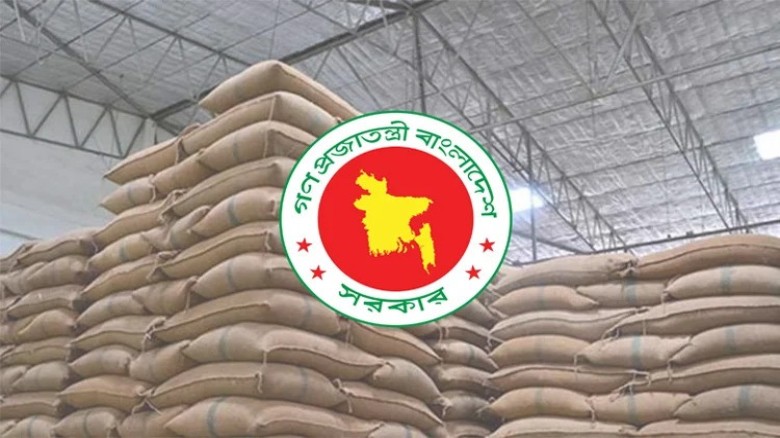

DHAKA : The country’s food grain stock has increased by
148,484 metric tonnes during first six months of the present government.
According to the food ministry officials, country’s
current food stock is 23,59,154 metric tonnes which was 22,10,670 metric tonnes
on February 10 last, reports BSS
The country’s food grain stock capacity was previously
around 24 lakh metric tonnes. But, under a special initiative by the BNP
government, plans are in place to raise the capacity to 34 lakh metric tonnes
within the next five years. The food storage capacity has already been
increased to 27 lakh metric tonnes.
In addition to increasing storage capacity, the government
has taken steps to raise the safe food stock limit, officials said.
Previously, a stock of 13.5 lakh metric tonnes was
considered the safe limit. However, the incumbent government, led by Prime
Minister Tarique Rahman, has revised this benchmark, setting the safe limit at
16 lakh metric tonnes.
Officials said there are currently no concerns regarding
the food situation in the country, thanks to the government’s food-friendly
policies.
According to the latest data from office of the
Directorate General of Food, government food grain stockpiles are currently at
a satisfactory level. The total stock comprises 20,36,102 metric tonnes of
rice, 2,32,183 metric tonnes of wheat, and 34,070 metric tonnes of paddy.
The total government food grain stock, including floating
stock (grain currently in transit or being processed) stands at 23,59,154
metric tonnes. This total includes 68,723 metric tonnes of wheat as floating
stock.
The upward trend in food grain stocks was more evident
compared to the tenure of the fallen Awami League government, officials said.
Stakeholders said adequate food stocks will play a crucial
role in maintaining normal market supply, stabilising prices, and addressing
any emergency situations.
Meanwhile, significant progress has been made in the
ongoing Boro procurement drive. For the fiscal 2025-26, a total of 16,83,195
metric tonnes of food grains (paddy and rice) had been procured by September 9,
2026.
Of those, 5,78,140 metric tonnes are paddy, while
12,01,568 tonnes of boiled rice, and 1,05,313 metric tonnes of sun-dried rice
(Atap). In addition, 523 metric tonnes of wheat were procured.
Import activities are also underway to address potential
food grain shortages and strengthen stock levels.
From July 1 to September 9, 2026, a total of 8,27,700
tonnes of food grains were imported through both public and private channels.
Of this 65,860 metric tonnes were imported by the government while 7,61,840
tonnes were imported by the private sector.
Food ministry officials said, the government is working
with an integrated plan covering production, procurement, importation, and
stockpiling to ensure the country’s food security. Stock levels are being
monitored regularly to ensure an adequate food supply for the population, they
said adding that the country’s present food security system is currently
remained in a strong position.
However, taking into account factors such as population
growth and food consumption patterns, the government has initiated measures to
increase the safe food reserve target to 16 lakh tonnes.
Mohammad Kamrul Islam Chowdhury, Joint Secretary
(procurement wing) of the ministry told BSS that the domestic food grain
procurement drive for the current season is being implemented successfully.
He said the government warehouses currently hold adequate
and secure stocks of rice and wheat. The reserve will serve as a strong
foundation for handling any situation and ensuring national food security.
Director General of the Food Planning and Monitoring Unit
(FPMU) Mahbubur Rahman said the government is continuously working to adjust
food grain stocks and storage capacity with increasing national demand.
He said there was adequate rainfall this season, ushering
hope to achieving the desired targets for Aman harvest. The government expects
to surpass the Aman procurement target.
Mahbubur mentioned that wheat prices in the international market are steadily rising, which could increase import costs. However, he said, the government has contingency plans- such as distributing rice instead of wheat under the ‘Food-Friendly Programme’. Given the current situation, there is no possibility of a food crisis, he said.