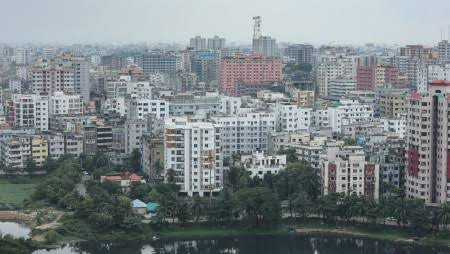

The Bangladesh Institute of Planners (BIP) expresses deep
concern, strong protest, and condemnation regarding recent amendments to the
Detailed Area Plan (DAP) for Dhaka. These changes—notified in the Bangladesh
Gazette—include the authorization of heavy industries in areas like Shyampur
(instead of preserving open spaces), the permitting of heavy industrial
facilities along the environmentally critical banks of the Buriganga River, the
granting of increased Floor Area Ratio (FAR) in the Purbachal and Jhilmil
areas, and other modifications to land-use guidelines.
It is imperative to critically examine whether the questions
and concerns arising from the amendments—published in the Bangladesh Gazette on
October 12 and October 14, 2026—align with the long-term objective of
developing Dhaka into a well-planned, environmentally friendly, and livable
city.
The BIP asserts that altering fundamental land-use
guidelines—a matter of critical urban planning—without adequate technical
assessment, input from relevant professionals, institutional review, and due
consideration for the public interest is unacceptable. Such changes not only
raise questions regarding the procedural transparency and accountability of the
planning process but also risk conflicting with the core principles essential
for building a modern, livable, and sustainable city.
The land-use plan for Dhaka, developed through extensive
research, data analysis, and careful planning, prioritizes the preservation of
open spaces, environmental balance, public health, and the quality of life for
its citizens. Consequently, any decision to reallocate designated land for
heavy industrial use requires a transparent and credible explanation regarding
its potential environmental, social, and urban-planning impacts.
Open spaces are not merely surplus or unnecessary land
within a city. These elements are essential for ensuring a healthy lifestyle
for citizens, providing recreation, maintaining environmental balance,
fostering climate resilience, and creating a livable city for future
generations. If areas designated for open-space preservation in long-term plans
are instead allocated for heavy industrial facilities, there must be a clear
and effective public explanation as to how the resulting loss of open space will
be compensated. Failure to address this could severely compromise the city’s
overall planning balance.
Another significant concern raised by the Bangladesh
Institute of Planners (BIP) is the lack of transparency regarding the process
through which such critical planning changes were made—specifically, whose
input was considered, and what technical or public-interest justifications were
used. According to information from professional circles, neither the Board of
Members of RAJUK (Rajdhani Unnayan Kartripakkha) nor the relevant
representatives from the Bangladesh Institute of Planners were informed about
these changes. If true, this is deeply alarming and raises serious questions
regarding the institutional legitimacy, transparency, and accountability of the
decision-making process.
Upon reviewing the published amendments, the BIP expresses
concern that the interests of specific groups may have been prioritized over
the public interest and essential planning requirements. An impartial
investigation is necessary to determine whether this is the case. Decisions as
critical as urban land use should never be influenced by the interests of any
individual or group. Instead, such decisions must be grounded in evidence-based
planning, environmental considerations, the public interest, and long-term
urban development goals.
In this context, the Bangladesh Institute of Planners puts
forward the following demand:
1. Revoke the relevant gazette amendments: The
implementation of changes concerning the preservation of open spaces, land use,
and the approval of heavy industrial facilities must be halted until a
comprehensive and independent technical review is conducted. If the review
reveals that any changes are contrary to the public interest or lack sound
planning justification, those amendments must be revoked. 2. Impartial
Investigation into the Decision-Making Process: An impartial investigation must
be conducted to identify the individuals, institutions, and every stage of the
decision-making process involved in the formulation and approval of the
relevant amendments. If evidence of irregularities, abuse of power, or
conflicts of interest—whether personal or group-related—is uncovered,
appropriate action must be taken against those responsible, in accordance with
existing laws and regulations.
3. Assessment of Planning and Environmental Impacts: A
detailed assessment must be published regarding the impact of approving heavy
industrial facilities—in place of open spaces—on the environment, public
health, urban livability, land-use balance, and civic amenities. A clear plan
must be provided outlining how any resulting deficit in open space will be
addressed.
4. Transparent and Participatory Review: An open and
transparent review process must be ensured, involving RAJUK, the Bangladesh
Institute of Planners, relevant experts, environmentalists, urban planners, and
citizen representatives. For any such changes in the future, obtaining
professional input and undergoing institutional review must be made mandatory.
5. RAJUK’s Formal Statement and Accountability: RAJUK must
provide a clear explanation regarding the reasons for the amendments, the
authorities behind the decisions, and the technical justifications upon which
they were based. This includes demonstrating RAJUK’s institutional commitment
to following proper urban planning procedures, preserving open spaces, and
safeguarding the public interest.